
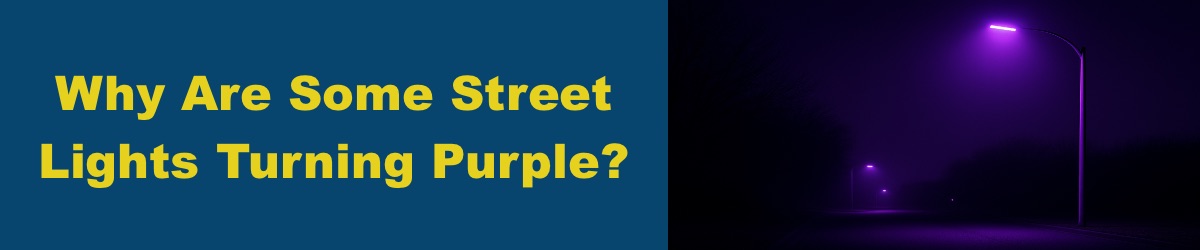
If you’ve driven around Boston lately, you may have noticed some street lights shining with an unusual purple hue. For many people, seeing these purple street lights for the first time sparks curiosity and even confusion, as the color is quite different from the typical white glow. People have noticed this phenomenon not only in Boston but also in other cities across the United States and Canada, including places like Kansas City, Milwaukee, Florida, and Phoenix. Since early 2021, a large number of LED streetlights in the US and Canada have undergone a visible shift from white to violet or purple light, making this a widespread issue that has emerged in the 2020s.
No, it’s not a tribute to Prince - or Hendrix. It’s a warning.
If you've ever pulled into a parking lot or driven down a street only to find the area cast in an eerie purple glow, you’re not alone, and you’re not hallucinating either. From Pennsylvania to Kansas, LED street and parking lot lights are turning an unexpected shade of violet. While some might see “Purple Haze” and think of classic rock, this isn’t about Hendrix or trippy sci-fi. It’s about failing lighting infrastructure, and the consequences go far beyond color. So, one may ask the question: "Why are some street lights purple?"
Let’s break it down.
Key Takeaways
-
-
Purple LED lights are the result of phosphor layer failure, which causes the underlying violet or blue LED chips to emit visible purple light instead of white light.
-
This issue is typically caused by manufacturer defects, UV exposure, or premature aging of materials, often affecting specific batches or models of fixtures.
-
Replacing purple LEDs promptly is important for safety, liability, and maintaining effective, uniform illumination in public and commercial environments.
-
What Causes Some LED Lights to Turn Purple?
At the core of most white LEDs is a blue diode coated with phosphor, a compound that is designed to convert blue LED emission into broad-spectrum white light, often by combining blue, red, and green light. The defective phosphor coating in streetlight fixtures was intended to make the bluish color of the LEDs appear as bright white light. When the phosphor layer degrades, cracks, or separates, often due to heat buildup, vibrations, or gravity causing delamination, it allows excess blue-violet light to pass through. This results in a visible color change or spectral shift, causing the hue of the light to appear purple. The bulbs in these fixtures are often defective LEDs, and this issue is most common in defective lights manufactured between 2017 and 2019.
Some LEDs that were manufactured with early or lower-quality phosphor layers are now exhibiting spectral degradation, exposing what’s essentially the raw blue light. To our eyes? It looks purple.
Scientific American confirms this: “In some cases, the phosphors degrade and change color… exposing the underlying LEDs completely… significantly shifted toward the blue end of the spectrum.”
Why Are Purple LED Street Lights More Than Just a Cosmetic Issue?
While it might look funky or futuristic, purple LEDs don’t perform like the lights they were designed to replace.
Here’s what’s really happening:
- Reduced CRI (Color Rendering Index) - These lights no longer provide true-to-life color visibility, making it harder to see objects or faces clearly.
- Narrowed Spectrum - Instead of broad-spectrum 4000K-5000K lighting, you’re getting a limited blue-heavy spectrum, degrading overall visual effectiveness.
- Lower Effective Lumens - Even if the fixture still outputs the same lumens, the perceived brightness that your eye can effectively use is reduced. It’s the same principle we learned moving from HPS to LED, now working in reverse. Purple streetlights can also dim the lamps' brightness, which is a concern since streetlights are supposed to emit a certain level of light for safety, especially in dark conditions.
- Safety Risks - The blue-violet light emitted by purple streetlights can cause glare, distort vision, and make it difficult to distinguish between different colors, including traffic signals and emergency vehicle lights. This can be distracting and create uncomfortable glare for drivers, impacting both driver and pedestrian safety. Diminished visibility can increase the risk of accidents or crime in poorly lit areas. Everything may appear as a shade of blue or black, making it harder to recognize hazards or details at night.
If a facility knows the lights in its parking lot have degraded and doesn’t take corrective action, this could raise liability concerns, especially in the event of an incident.
LED Lighting and Energy Efficiency: The Bigger Picture
The rapid shift to LED street lights across cities in the United States and Canada has been driven by the promise of greater energy efficiency, lower maintenance costs, and a reduced environmental footprint. Compared to traditional sodium lamps, LED streetlights use far less energy and last much longer, meaning fewer replacements and less waste. This transition has also helped cities tackle light pollution, as modern LED lights can be designed to emit less blue light into the night sky, minimizing disruption to wildlife and human sleep patterns.
However, the recent wave of purple street lights caused by a manufacturing defect in the phosphor layer has highlighted the importance of quality control in LED technology. When the phosphor layer fails, the underlying blue or violet light-emitting diodes become visible, resulting in the now-infamous purple lights. While only a small percentage of fixtures are affected, the “great purpling” has raised concerns about the reliability of LED streetlights and the potential safety hazard they pose for drivers and pedestrians. Discolored lights can reduce visibility, making it harder to see obstacles, pedestrians, or other vehicles, especially at night.
Manufacturers and utility companies have responded quickly. Industry leaders have acknowledged the defect and are working to replace affected fixtures. The LED Systems Reliability Consortium is also investigating the root causes of these failures, aiming to improve manufacturing processes and prevent similar issues in the future. These efforts underscore the need for rigorous quality control and ongoing research as LED technology continues to evolve.
Despite these setbacks, the benefits of LED street lights remain clear. Their energy savings, long life, and ability to reduce light pollution make them a cornerstone of modern, sustainable urban infrastructure. As cities continue to invest in smart lighting systems integrating sensors, IoT devices, and adaptive controls LED streetlights will play an even bigger role in creating safer, more efficient, and more responsive public spaces.
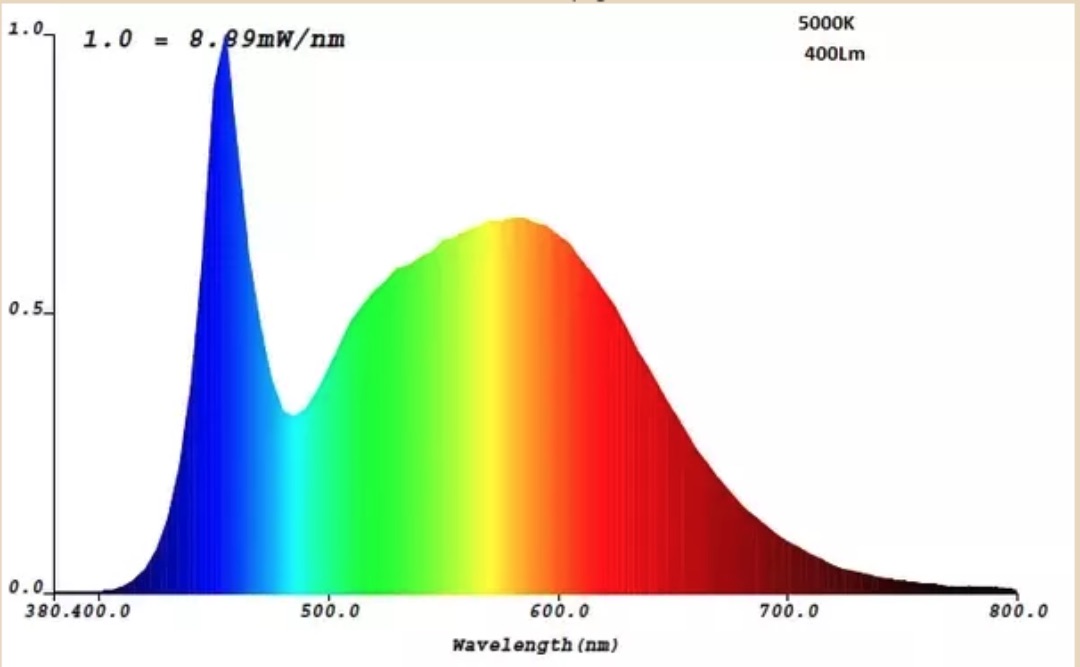
Spectrum Chart of an LED That is 5000 Kelvin

As The Light Degrades, it is Shifting to a Narrower Blue Spectrum That Emits a Purple Light
The lesson from the purple streetlights is simple: as we embrace new technology, we must also prioritize reliability and quality. By learning from these challenges and investing in better materials, manufacturing, and oversight, cities can ensure that the promise of LED lighting lower energy use, improved safety, and a healthier environment is fully realized for everyone. The “great purpling” serves as a vivid reminder that innovation and quality control must go hand in hand as we light the way to the future.
What Should Facility Managers and Property Owners Do About LED Lights That Turn Purple?
If your parking lot or street lights have turned purple, it’s time to act:
- Identify Affected Fixtures - Conduct a nighttime inspection to document which lights are displaying a color shift. Municipalities and local transportation agencies are documenting incidents of purple streetlights and initiating replacement programs for affected fixtures. The Massachusetts Department of Transportation has ordered replacement parts for purple streetlights identified in its inventory.
- Document the Issue and Check Warranty - Record the brand and company of the affected fixtures, check if they are still under warranty, and contact the manufacturer or vendor for a replacement. Utilities and departments of transportation (DOTs) are coordinating warranty replacements for purple streetlights across multiple states and Canadian cities. Manufacturers have reported significant warranty costs associated with these replacements.
- Plan Replacements or Upgrades – Switch to high-quality LED fixtures with tested phosphor stability and a reliable L70 rating. Ensure you use approved replacement parts to prevent recurrence of the issue.
- Verify Lighting Levels - Reduced CRI and spectrum also impact photometric performance. Consider a photometric analysis to confirm footcandles and uniformity still meet recommended guidelines.
Residents are encouraged to report purple streetlights to their local utilities for expedited replacement and to help local agencies address the issue quickly.
Can You Prevent LED Street Lights From Turning Purple?
Yes, with quality control and better materials. Reputable LED manufacturers use advanced phosphor blends and more resilient construction to prevent premature degradation. Access Fixtures, for instance, offers commercial LED lighting designed for long-term performance, with published L70 data and consistent color temperature across the board.
SHOP LED WALL PACKS THAT DON'T TURN PURPLE
Link to the Music? Not Quite.
While the term "Purple Haze" has musical roots, Hendrix’s psychedelic classic was inspired by the sci-fi novel "Night of Light." This purple haze is purely technical. And while it may make for great social media fodder, it’s ultimately a sign of equipment failure, not flower-power nostalgia.
SHOP LED AREA LIGHTS & FLOOD LIGHTS THAT DON'T TURN PURPLE
Final Thoughts
Lighting degradation doesn’t always mean lights go out; it sometimes means they get weird. If your street or parking lot is glowing violet, it’s a call to action, not a cue to queue up classic rock. Reduced light performance has real-world implications for safety, insurance, and liability.
SHOP LED SOLAR LIGHTS THAT DON'T TURN PURPLE
Want to Learn More About High-Performance LED Lighting Solutions?
-
Why Are Street Lights Purple? - A broader look at the causes of purple street lights and how Access Fixtures helps prevent the issue.
-
Commercial Parking Lot Lighting Solutions - Improve safety, visibility, and performance with tailored lighting solutions.
-
Photometric Analysis Services - Ensure your project meets required light levels and uniformity with expert analysis.
-
Landscape Lighting Solutions - Enhance outdoor environments with efficient, durable, and attractive lighting designs.
Purple LED Street Lights Frequently Asked Questions (FAQs)
What causes LED street lights to turn purple?
Purple street lights are typically caused by the degradation or delamination of the phosphor coating that converts blue/violet LED light into white light. When this layer fails, the raw violet or blue light becomes visible.
Is this a defect or an intended feature?
This is a manufacturing defect, not an intended feature. LED streetlights are designed to emit white light; purple light signals a failure in the phosphor layer or LED packaging.
Are purple LED lights dangerous?
While not immediately hazardous, purple LED lights can reduce visibility and color accuracy, which may pose safety and liability issues for municipalities, property owners, or drivers.
Can I repair a purple LED fixture?
No, the failure is internal and cannot be fixed. The affected LED fixture must be replaced.
Why do only some lights turn purple?
Purple LED failures typically affect specific production batches with defective materials or manufacturing processes, so only certain fixtures fail—usually from the same timeframe or supplier.
Do purple LED lights use more energy?
No, they consume the same amount of energy as functioning LED lights. The issue lies in the color output, not the power draw.
How can I identify if a fixture will turn purple?
There’s no way to visually predict it. However, if the model or batch is known to have prior failures, it may be more prone. Keeping track of manufacturer recalls or known issues helps.
What should I do if my installed LEDs turn purple?
Document the issue, check the warranty, and contact the manufacturer or vendor for a replacement. Many LED fixtures have multi-year warranties covering defects.
Are there any recalls on purple LED street lights?
Yes, some manufacturers have issued recalls or replacements for affected batches. Always check the manufacturer’s website or contact them directly for details.
How can I avoid buying LEDs that may turn purple?
Choose lighting from trusted manufacturers with strong warranties, robust QA testing, and a track record of reliability. Look for fixtures rated for environmental durability and UV exposure.