
Solar Powered Tennis Court Lights: Complete Guide to Energy-Efficient Court Lighting
Introduction
Solar-powered tennis court lights are LED lighting solutions that operate entirely on energy collected from photovoltaic panels, eliminating electricity bills and providing sustainable illumination for tennis courts without requiring electrical infrastructure. These systems combine high-efficiency solar panels, battery storage, and LED fixtures to deliver consistent lighting for evening matches while reducing both energy costs and environmental impact.
Access Fixtures solar tennis court lights deliver up to 39,000 lumens per fixture and can illuminate tennis courts for hours on a single charge, making them a viable alternative to traditional lights for both recreational and club levels of play.
What This Guide Covers
This comprehensive guide explains solar LED lighting solutions specifically designed for tennis courts, including proper solution fixture count, installation requirements, and long-term cost comparisons with grid-tied lighting. We focus on practical applications rather than theoretical concepts, providing actionable information for real-world tennis court lighting projects.
Who This Is For
This guide is designed for tennis facility owners, court managers, recreation directors, and private court owners evaluating sustainable lighting solutions. Whether you’re managing club level courts or planning a new residential tennis court installation, you’ll find specific technical details and cost analysis to support your decision-making process.
Why This Matters
Rising electricity bills and environmental sustainability goals are driving facility owners toward renewable energy solutions for outdoor courts. Solar powered tennis court lights eliminate ongoing energy costs while providing reliable illumination for evening matches, with many systems paying for themselves within 5-7 years through energy savings alone.
What You’ll Learn:
- How solar tennis court lighting technology delivers consistent performance
- Proper system sizing for uniform lighting across the entire court surface
- Installation requirements and site preparation for optimal performance
- Cost analysis comparing solar systems to traditional grid-powered court lights
Key Takeaways
- Solar LED systems provide many hours of lighting from a single charge
- Proper pole spacing and mounting height ensure even coverage without dark spots
- Initial costs are offset by eliminated electricity bills and reduced maintenance costs
- Modern systems deliver sufficient brightness levels for competitive play
What Should You Know About Solar Tennis Court Lighting Technology?
Solar powered tennis court lighting systems integrate photovoltaic panels, battery storage, and LED fixtures into self-contained units that operate independently from electrical grids. These systems collect solar energy during daylight hours, store it in high-capacity batteries, and automatically provide illumination during evening hours when courts are most frequently used.
The technology addresses critical lighting requirements for tennis courts, which typically need 20-30 foot candles of illumination for recreational play and 30-60 foot candles for club matches. Unlike traditional lights that rely on continuous electrical power, solar systems store enough energy to maintain consistent lighting throughout extended playing sessions.
What Are the Key Components and Energy Storage Options in Solar Tennis Court Lighting?
Solar panels in tennis court applications typically use monocrystalline technology for maximum energy collection efficiency, even during partially cloudy conditions. These panels are positioned to capture optimal sunlight throughout the day, with many systems featuring adjustable mounting angles to accommodate seasonal sun positioning.
Battery technology has evolved significantly, with modern systems utilizing lithium-ion or LiFePO4 batteries that provide 12+ hours of continuous lighting capacity. This connects to the main concept of energy independence because battery capacity determines how many consecutive nights the system can operate without solar recharging, ensuring reliable court lighting even during harsh weather conditions.
Maximum Power Point Tracking (MPPT) controllers optimize energy harvesting from solar panels, increasing overall system efficiency by 20-30% compared to standard controllers. This enhanced efficiency directly impacts how long the system can illuminate tennis courts during extended evening play sessions.
How Does LED Technology and Light Distribution Impact Solar Tennis Court Lights?
Modern solar tennis court fixtures utilize advanced LED technology with multiple beam pattern options to ensure proper visibility across the playing surface. The optics and light distribution patterns include:
- T1VS (60°x100°) for focused illumination
- T2S (70° x 135°) for medium coverage areas
- TSVS (110°) for broad, uniform lighting
- TSVVS (150°) for maximum coverage zones
- T3M (75°× 150°) for enhanced court coverage
- T3S (80° x 150°) for optimal light distribution
Color temperature specifications of 4000K-5000K enhance visibility for tennis ball tracking and reduce eye strain during competitive matches. This cooler light temperature provides better contrast against the green court surface compared to warm lighting options.
Building on storage concepts, LED efficiency ratings of 180+ lumens per watt maximize battery runtime, allowing courts to maintain brightness levels throughout extended evening play without depleting stored energy reserves.
How Do System Specifications Ensure Uniform Court Coverage in Solar Tennis Lighting?
Tennis court solar lighting systems require precise engineering to deliver uniform lighting without dark spots or glare that could affect player performance. Solar Lighting Packages offer various average footcandle levels with max/min ratios less than 2.0, using different wattages of the SUNA Solar LED Tennis Court Light to accommodate specific court requirements and usage patterns.
Professional installations typically utilize photometric analysis to determine optimal fixture placement and ensure compliance with lighting standards for different levels of play.
How is Light Output and Coverage Optimized for Solar Tennis Court Lighting?
Lumen requirements range from 11,500-12,000 lumens per fixture for standard court coverage, though Access Fixtures Solar Light SUNA systems can deliver up to 39,000 lumens for enhanced illumination. These higher output levels support competitive play and ensure clear visibility throughout the entire court area.
Coverage patterns depend on pole spacing and mounting height, with illumination zones carefully calculated to eliminate shadows and provide even coverage across the tennis court surface. Professional installations consider court orientation, surrounding structures, and potential obstructions when designing optimal light distribution.


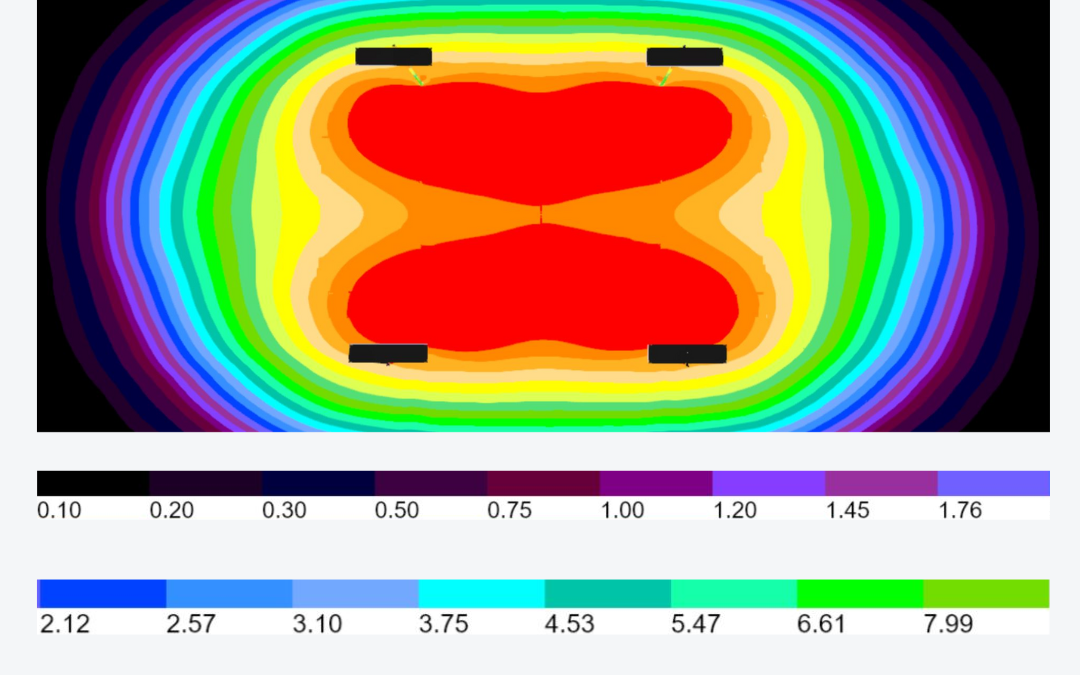
Mounting height considerations specify 20 to 30-foot poles for optimal light distribution and player safety. Higher mounting positions reduce glare and shadows while ensuring fixtures remain out of the ball trajectory during normal play. This elevation also improves light uniformity across the court surface.
How Are Light Poles Engineered for Durability and Safety for Tennis Court Lighting?
Tennis court light poles utilize aluminum construction with 4” square posts and ¾” radius corners specifically designed for player safety. This rounded corner design reduces injury risk if players contact the poles during play while maintaining structural integrity for the lighting equipment.
Weather resistance ratings of IP66 protect electrical components from moisture and dust infiltration common in outdoor environments. Wind load specifications ensure poles and fixtures remain stable during harsh weather conditions that could affect other outdoor equipment.
Unlike basic lighting poles, tennis court poles must withstand ball impact without shaking or movement that could affect light beam stability. The aluminum construction provides durability while remaining lightweight enough for efficient installation processes.
How Do Smart Controls and Energy Management Improve Solar Tennis Court Lights?
MPPT controller technology optimizes charging cycles and extends battery life through intelligent energy management. These controllers automatically adjust charging rates based on battery condition and solar panel output, maximizing energy efficiency throughout varying weather conditions.
Wireless remote controls and programmable timing features allow facility owners to customize automatic court lighting schedules based on usage patterns. These systems can adjust brightness levels during different time periods to conserve energy while maintaining adequate illumination for player safety.
Intelligent brightness adjustment responds to battery levels and usage patterns, ensuring consistent performance throughout the evening while preventing complete battery depletion that could leave courts without illumination during critical periods.
Tennis Court Lighting Packages - Solar-Powered Options
- Solar Tennis Court Lighting Package – Avg. 22fc, 2.6 Max/Min, 4 200w LED Lights on 4 20′ Poles
- Solar Tennis Court Lighting Package – Avg. 19fc, 1.31 Max/Min, 4 200w LED Lights on 4 25′ Poles
- Solar Tennis Court Lighting Package – Avg. 32fc, 1.38 Max/Min, 8 150w LED Lights on 4 20′ Poles
What is the Installation Process and Site Requirements for Solar Tennis Court Lighting?
Professional installation of solar tennis court lighting requires careful site assessment and proper foundation preparation to ensure long-term performance and player safety. The installation process builds upon system specifications by translating technical requirements into practical implementation steps that deliver optimal court illumination.
Step-by-Step Installation Process
When to use professional installation: Tennis court lighting installations require electrical expertise and compliance with local building codes, making professional installation recommended for most facilities.
- Site Assessment and Pole Positioning: Evaluate court orientation, surrounding obstructions, and optimal fixture placement for uniform lighting coverage across the playing surface.
- Concrete Foundation Installation: Install properly sized concrete footings with 48-72 hour curing period to ensure adequate support for wind loads and equipment weight.
- Pole Assembly and Fixture Mounting: Assemble poles and mount fixtures at the proper height and angle to achieve specified illumination levels without creating glare or dark spots.
- Solar Panel Alignment and Electrical Connections: Position solar panels for optimal sun exposure and complete electrical connections with the battery system, ensuring proper grounding and weatherproofing.
Always consult your local lighting engineer for installation. Access Fixtures does not install LED lighting but provides technical support for proper system design and implementation.
Comparison: Solar-Powered vs. Grid-Powered Tennis Court Lights
Solar-powered tennis court lights require a higher upfront investment, but they eliminate trenching, wiring, and monthly electricity bills, delivering long-term savings and a strong return on investment. Operating entirely off-grid, they use renewable energy to power efficient LED fixtures with minimal maintenance. Grid-powered systems have lower initial costs but incur ongoing electricity expenses and require trenching and wiring, though they provide consistent, high-output illumination for precision lighting needs.
What Are The Common Challenges and Solutions for Solar Tennis Court Lighting?
Solar tennis court lighting projects face specific obstacles related to outdoor environments, energy storage limitations, and performance requirements for different levels of play. Understanding these challenges helps facility owners make informed decisions and prepare for successful installations.
Challenge 1: Insufficient Battery Runtime During Winter Months
Solution: Oversized battery capacity 20% above calculated needs and implement seasonal usage scheduling to accommodate reduced solar charging during shorter winter days.
Battery management systems automatically adjust charging cycles and monitor performance to maintain adequate energy reserves. Cold weather performance specifications ensure reliable operation even when temperatures drop below freezing, maintaining consistent lighting for year-round tennis activities.
Challenge 2: Uneven Light Distribution Across Tennis Court Surface
Solution: Proper pole spacing, and mounting height optimization ensures uniform coverage without dark spots that could affect player performance during competitive play.
Additional considerations include court orientation relative to surrounding structures and avoiding shadows from nearby buildings or trees. Access Fixtures can run a photometric analysis to determine optimal fixture placement and beam patterns for specific site conditions.
Challenge 3: High Initial Investment Costs Compared to Grid-Tied Systems
Solution: Calculate 5-7 year payback period including eliminated electricity bills and reduced maintenance costs to demonstrate long term savings potential for facility budgets.
Annual energy cost avoidance of hundreds of dollars per fixture, combined with minimal maintenance requirements, provides substantial cost savings over the system’s operational life. Many facilities finance solar installations through equipment loans or leasing programs that allow immediate implementation without large capital expenditures.
Conclusion and Next Steps
Solar powered tennis court lights deliver energy independence, environmental sustainability, and long term savings for tennis facilities while providing consistent lighting performance that meets requirements for both recreational and competitive play. Modern systems eliminate ongoing electricity bills and reduce carbon emissions while maintaining the reliability needed for evening matches and tournament play.
The technology has matured to the point where solar systems can match or exceed the performance of traditional lights while offering numerous benefits including reduced maintenance costs, enhanced player safety, and environmental sustainability that appeals to both facility owners and customers.
To get started:
- Assess current court lighting needs and calculate existing energy costs for comparison with solar alternatives
- Contact certified dealers for site evaluation and system sizing recommendations based on court dimensions and usage patterns
- Compare financing options and installation timelines to determine the most suitable approach for your facility’s budget and operational requirements
Related Topics: Consider exploring grid-tie solar systems for facilities with existing electrical infrastructure, LED retrofit options for upgrading traditional court lighting, and court lighting regulations for facilities hosting competitive tournaments or sanctioned events.
Additional Resources
Professional photometric analysis services help determine optimal fixture placement and ensure compliance with lighting standards for different levels of tennis play. Many manufacturers provide design support and technical specifications to assist with proper system sizing and installation planning for specific court configurations and local environmental conditions.
Solar Powered Tennis Court Lights Frequently Asked Questions (FAQs)
What are solar powered tennis court lights?
Solar powered tennis court lights are LED lighting systems that use energy collected from solar panels to illuminate tennis courts without relying on the electrical grid. They offer energy-efficient, environmentally friendly lighting for evening matches.
How long can solar tennis court lights operate on a single charge?
Most solar tennis court lighting systems can provide illumination for 12 or more hours on a single full charge, ensuring consistent lighting throughout evening matches and sometimes multiple nights, depending on battery capacity and weather conditions.
Are solar powered tennis court lights suitable for club level courts?
Yes, these lights are designed to meet the lighting requirements of both recreational and club level courts, providing sufficient brightness and uniform lighting to enhance player performance and safety.
What is the typical installation process for solar tennis court lights?
Installation involves site assessment, setting concrete foundations, assembling light poles, mounting fixtures, and positioning solar panels for optimal sun exposure. Professional installation is recommended to ensure compliance with safety and lighting standards.
How do solar tennis court lights compare to traditional grid-powered lights in terms of cost?
While the initial investment for solar lights can be higher, they offer significant long-term savings by eliminating electricity bills and reducing maintenance costs, often paying for themselves within 5-7 years.
Can solar tennis court lights withstand harsh weather conditions?
Yes, these lighting systems are built with durable materials and weather-resistant ratings (such as IP66) to perform reliably in outdoor environments, including rain, wind, and temperature fluctuations.
Do solar tennis court lights require maintenance?
Solar court lights require minimal maintenance, mainly periodic cleaning of solar panels and battery checks to ensure optimal performance and longevity.
Can these solar lights be used for other types of courts?
While optimized for tennis courts, solar powered LED lights can also effectively illuminate other outdoor courts such as pickleball courts, basketball courts, and multi-use sports facilities.
How do solar tennis court lights contribute to environmental sustainability?
By using renewable solar energy, these lights reduce carbon emissions and electricity consumption, supporting environmentally friendly sports facility operations.
Where can I purchase solar powered tennis court lights and get delivery?
Solar tennis court lights are available through certified dealers and manufacturers who offer delivery services. It's important to select a reputable supplier with stock availability and reliable delivery options.