
LED Soccer Field Lighting for Every Competition Level
At Access Fixtures, one of our goals is to simplify high-performance lighting solutions for our customers. We ask ourselves every day how we can provide efficient and high-quality lighting to end users, contractors, and property owners. Sometimes our projects are small and sometimes they are larger. As we continue to develop and perfect new sports lighting packages, we have increasingly found ourselves looking to create and implement lighting packages for soccer field lighting and provide the right number of footcandles to every level of play.
There is significant planning involved in designing effective soccer field lighting solutions, including professional photometric analysis and careful fixture placement tailored to the specific requirements of each project.

"Thanks for all your help this past year; you have been extremely thorough, demonstrating a high degree of capability in all your interactions with me. "
Key Takeaways
-
-
Significant Planning is Essential: Designing an effective soccer field lighting system requires careful consideration of factors such as the level of play, field size, lighting fixture selection, and photometric analysis to ensure uniform lighting and optimal visibility.
-
LED Lighting Offers Superior Benefits: LED soccer field lighting provides energy efficiency, longer lifespan, instant on/off functionality, and improved visibility, making it a cost-effective and environmentally friendly choice for all levels of soccer fields.
-
Proper Pole Placement Enhances Safety and Performance: The height, number, and placement of lighting poles play a crucial role in minimizing glare, reducing light spillage, and maintaining clear sight lines for players and spectators, ultimately improving safety and the overall game experience.
-
How To Plan and Design a Soccer Field Lighting Solution?
Planning and designing a soccer field lighting system requires significant planning to achieve optimal results and ensure optimal visibility, safety, and gameplay experience. The process involves several factors that need careful consideration:
- Determining the Level of Play and Competition: Lighting requirements vary depending on the level of play and competition. For instance, a recreational field will have different needs compared to a professional stadium.
- Assessing the Field Size and Shape: Soccer fields vary in size, and the lighting layout must be tailored to fit the specific dimensions of your field.
- Evaluating the Existing Lighting Infrastructure: If there is already some lighting in place, it’s important to assess its condition and determine if it can be integrated into the new system.
- Considering the Budget and Financing Options: Budget constraints will influence the type and number of lighting fixtures you can install. Exploring financing options can help manage costs.
- Selecting the Right Type and Number of Lighting Fixtures: The main factors influencing this decision are field dimensions and level of play. Determining how many lights are needed based on these factors and the desired illumination levels is crucial for optimal soccer field lighting.
- Designing the Lighting Layout and Configuration: A well-thought-out layout ensures that the lighting is evenly distributed, minimizing shadows and glare.
- Conducting Photometric Analysis: This analysis is a key part of significant planning and helps in fine-tuning the lighting design to ensure uniform lighting and optimal performance.
The two main factors affecting the number of lighting poles needed are the field's dimensions and the level of competition.
A well-designed lighting system should provide adequate illumination, minimize shadows and glare, and meet the specific lighting requirements of players, referees, and spectators. Lighting requirements and design may vary depending on the specific needs of each project.
What is the Right Lighting Level for Your Soccer Field?
Obviously, a televised World Cup soccer game between two of the best soccer teams in the world is going to require different and more complex lighting than a junior high soccer team will. Access Fixtures has conducted independent research on the recommended footcandles for different levels of play and compiled the list below. Each of these figures is an approximate estimate as some of our sources contradict one another. However, the following can provide general guidelines when deciding how to light a soccer field.
- Recreational Level/Parks: 20-30fc
- High School Level: 30-50fc
- College Level: 50fc
- Semi Professional (College and Semi-Professional): 50-75fc
- Division I College Level: 75-100fc
- Televised National (FIFA standards): 130-190fc
- Televised International (FIFA standards): 170-225fc
Training fields and training facilities may have different lighting requirements compared to competition fields. These spaces often require specific illuminance levels and standards to ensure safety and visibility during practice sessions.
As stated previously, these are just general guidelines. Lighting may be increased or decreased depending on your particular soccer lighting project. It is important to provide adequate lighting for all types of soccer fields, including training fields and semi-professional venues, to ensure optimal visibility, safety, and performance.

What Are The Benefits of LED Soccer Field Lighting?
LED soccer field lighting offers numerous benefits, making it the preferred choice for modern sports lighting systems. High-quality field lights are essential for ensuring safety and performance on the soccer field, providing optimal illumination for both players and spectators.
Improved Visibility:
LED soccer field lights deliver better visibility, ensuring that players and spectators can clearly see the action on the field. This reduces the risk of poor visibility, which can impair gameplay and increase the chance of accidents. Properly designed soccer field lights help minimize the risk of a mid air collision between players by providing consistent and uniform lighting across the entire field.
Energy Efficiency:
- LED lights consume significantly less energy than traditional HID lights, resulting in lower operating costs and a reduced carbon footprint.
Longer Lifespan:
- LED lights have a longer lifespan, often up to over 200,000 hours, compared to HID lights, which last up to 10,000 hours. This reduces maintenance and replacement costs.
Improved Visibility:
- LED lights provide high-quality, uniform lighting that enhances visibility and accuracy on the field, improving the overall gameplay experience. Poor lighting can cause players to momentarily lose sight of the ball, negatively impacting players' tracking and the goalkeeper's ability to watch high shots.
Instant On/Off:
- LED lights turn on and off instantly, eliminating the need for warm-up time and reducing energy consumption.
Durability:
- LED lights are resistant to corrosion, fading, and extreme weather conditions, ensuring reliable performance and longevity.
These benefits make LED soccer field lighting a smart investment for any soccer field, providing high-quality lighting while being cost-effective and environmentally friendly.
What are Soccer Field Sizes and Lighting Layout?
Unlike sports like tennis, pickleball, and American football, soccer fields can range in size quite dramatically. Youth soccer fields barely resemble a soccer field used in the World Cup. Standard soccer field sizes can range anywhere from 100-130 yards long (from goal to goal) and 50-100 yards wide. This variance can make creating specific, ready-to-buy lighting packages difficult if not impossible. Soccer fields are typically illuminated using specialized field lights designed for uniform coverage. Other field issues that need to be taken into account are the location of bleachers, benches, and possible stadium sidelines. Lighting must be uniform and thus needs to be placed outside any possible barriers and also outside the field itself.
Soccer fields do, however, have some uniform elements. For example, the diameter of a soccer field’s center circle is always 20 yards. The penalty box is always 18 yards by 44 yards, and the goal area is always 6 yards deep. Knowing that the soccer field is always symmetrical on both sides is helpful in determining the placement of poles and luminaires. The dimensions and specifications of a soccer pitch are crucial in determining the number of lighting poles needed for effective illumination. Proper pole placement also improves spectators' lines of sight.
The quantity of luminaires will depend on the footcandle requirements. Four poles will typically be used to light a soccer field. Depending on the location of the soccer field, certain pole materials may be chosen over others. The importance of lighting poles in relation to their height and quantity for optimal sports field illumination cannot be overstated. Using taller poles and appropriate mounting heights helps reduce glare and improve direct sight for both players and spectators. Tall poles are especially important for plays like a goal kick high in the air, ensuring the goalkeeper and players maintain clear sight lines. Mounting lights at an acute angle can further enhance visibility and safety by minimizing glare and light spillage. Please discuss with your lighting specialist before determining which poles to use in your soccer lighting project.
ASTA: The Best Soccer Field Lighting Fixture
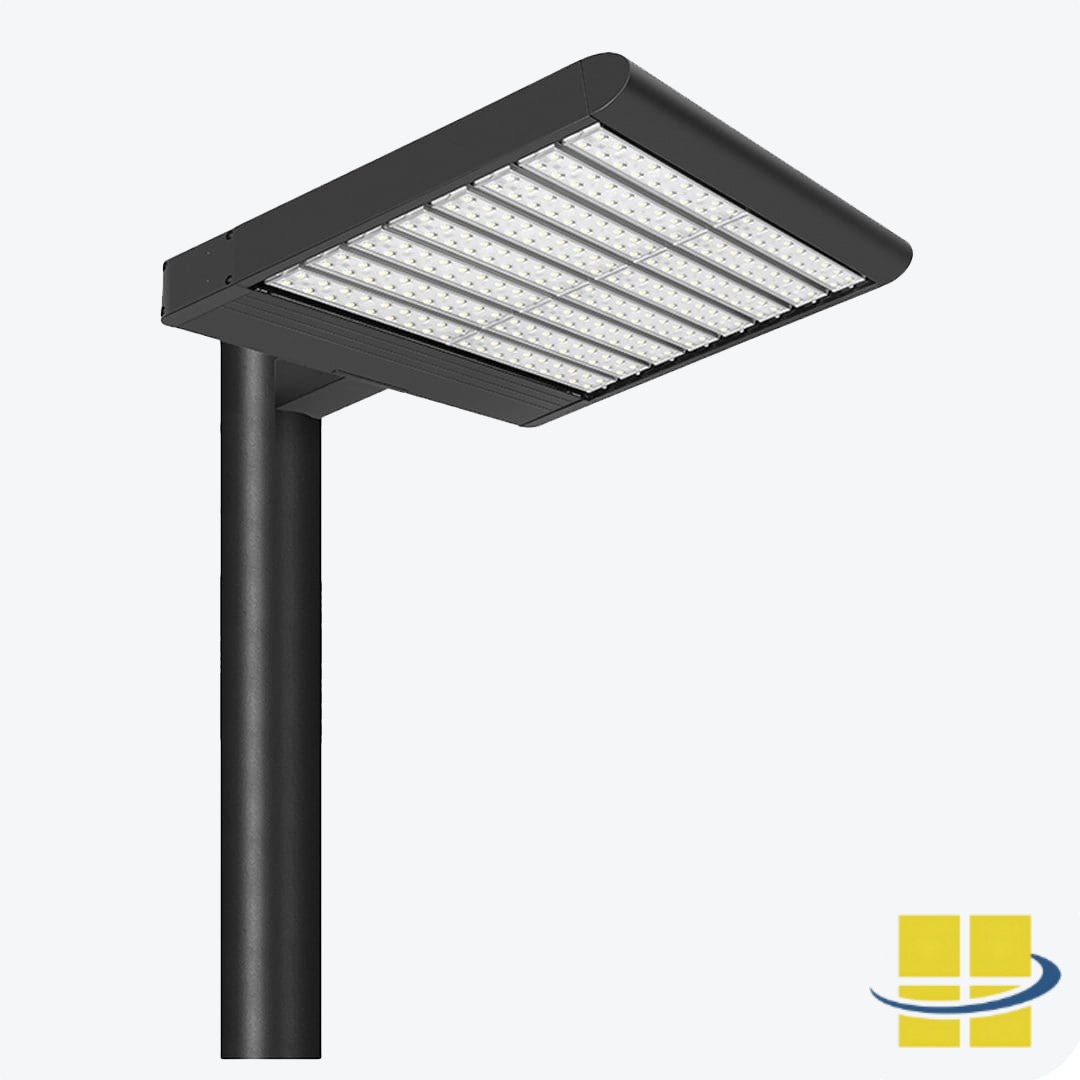
Access Fixtures’ ASTA sports lighter is the best option to light any soccer field, regardless of size or level of play. No matter the location, these high-powered fixtures get the job done.
The ASTA is an energy-efficient luminaire that emits 125+ luminaire lumens per watt. It is available in multiple wattages, and different combinations of these wattages may be used to create a perfectly even lighting solution for a soccer field. In terms of longevity, these fixtures are best in class. They are L70 rated at over 250,000 hours, compared to a traditional metal halide fixture that would only last for 15,000 hours. Sports lighting is a pain to replace, so it is better and more cost-effective for these fixtures to last as long as possible. ASTA luminaires feature custom optics, finishes, and color temperatures. LED light fixtures are more efficient, provide better brightness levels, and require less maintenance than traditional HID options, significantly impacting gameplay and spectator experience.
ASTA fixtures are IP67 rated, making them submersible, dustproof, corrosion-proof, and bug-proof. Their modular design means that if one module breaks, the others will still continue to function. This design also makes them incredibly easy to replace. As part of advanced systems, ASTA offers customizable and remotely updatable lighting solutions for soccer fields, ensuring ongoing adaptability and innovation. ASTA fixtures are guaranteed with an Access Fixtures warranty for five years after the purchase date. While outdoor soccer fields are more prevalent, indoor soccer fields also require specific types of lighting to ensure proper visibility.
The ASTA fixtures can be mounted in several different ways on different pole styles. Access Fixtures carries steel, aluminum, and fiberglass poles with a large assortment of mounting options. Mounting equipment and hardware are included with any purchase of a soccer field lighting package. Depending on the location, customer preference, and number of fixtures, one might choose one type of pole over another. Generally, questions of design are up to the customer’s discretion. Please note that soccer field lighting should only be installed by a licensed electrician! Stadium lighting is crucial for ensuring visibility and safety for players during soccer matches, as well as enhancing the viewing experience for spectators.
Lighting Solution Components
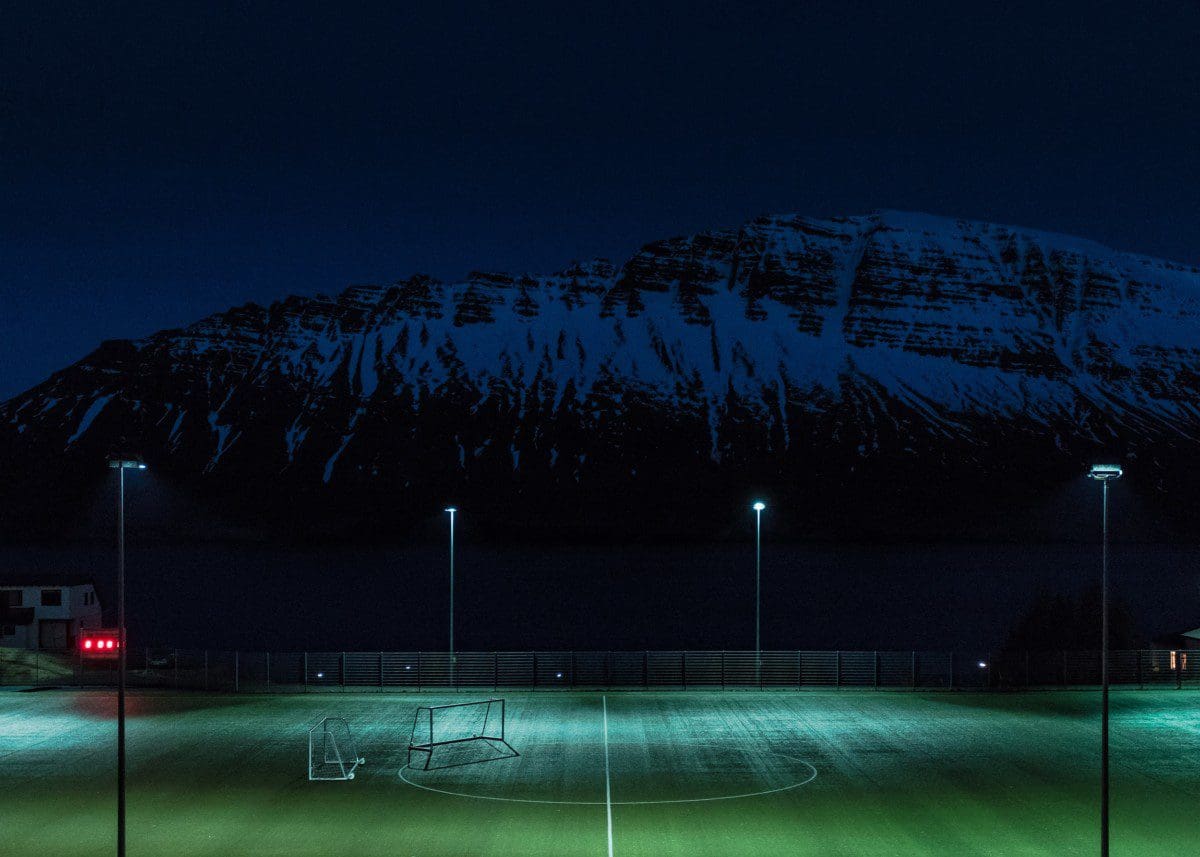
A well-designed lighting system is essential for any soccer field, ensuring optimal visibility, safety, and a superior playing experience. The main components of a soccer field lighting system include LED light fixtures, lighting poles, and a modern control system, each playing a crucial role in delivering uniform lighting across the playing surface.
LED light fixtures are the heart of any soccer field lighting system. These advanced fixtures are engineered to provide bright, uniform lighting, minimizing shadows and glare that can disrupt play. With options ranging from under 100 watts to 2400 watts, LED sports lighting can be tailored to meet the specific requirements of recreational fields, high schools, or professional stadiums. The high lumen output and energy efficiency of LED lights make them the preferred choice for field lighting, offering both superior illumination and reduced operating costs.
Lighting poles, also known as light poles, are used to mount the LED fixtures at the correct height and angle. The height and placement of these poles are critical to ensure uniform lighting and to minimize light spillage beyond the soccer field. Depending on the size of the field and the level of play, lighting poles may need to be taller to provide adequate coverage and avoid dark spots. Properly positioned lighting poles help create a consistent lighting environment, enhancing both player performance and spectator enjoyment.
Control systems add another layer of flexibility and efficiency to soccer field lighting. These systems allow operators to easily adjust lighting levels for different events, training sessions, or matches, ensuring the right amount of light is delivered for every situation. Advanced control systems can also help reduce energy consumption by dimming or turning off lights when the field is not in use.
Careful planning and integration of these components are essential for achieving the best results. By selecting the right combination of LED light fixtures, lighting poles, and control systems, you can ensure uniform lighting, optimal visibility, and a safe environment for everyone on and around the soccer pitch. Whether lighting a community soccer field or a professional stadium, investing in a high-quality lighting system is key to maximizing performance and enjoyment.
Installation and Maintenance
Installing and maintaining a soccer field lighting system requires careful planning and execution to ensure optimal performance and longevity. Here are some key considerations:
- Hiring a Professional Installer: It’s crucial to hire a professional with experience in sports lighting to ensure the system is installed correctly and safely.
- Ensuring Compliance with Local Regulations and Safety Standards: Adhering to local regulations and safety standards is essential to avoid legal issues and ensure the safety of players and spectators.
- Conducting Regular Maintenance Checks: Regular maintenance checks help identify and address any issues promptly, ensuring the lighting system operates efficiently.
- Replacing Faulty or Damaged Lighting Fixtures Promptly: Timely replacement of faulty or damaged fixtures prevents disruptions and maintains the quality of lighting.
- Upgrading the Lighting System as Needed: As technology advances and requirements change, upgrading the lighting system can help maintain optimal performance and meet new standards.
Regular maintenance is essential to ensure the lighting system operates efficiently, safely, and effectively, providing a high-quality lighting experience for all users.
Great Lighting is Our Goal
Soccer field lighting just became more convenient than ever. The importance of sports field lighting in enhancing the game’s visibility and safety for both players and spectators cannot be overstated. Any soccer field, no matter the level of play, can be lit with long-lasting and efficient LED fixtures. The fastest way to obtain lighting for your soccer field is to request a photometric analysis from Access Fixtures. A photometric analysis will take all the factors of your soccer field into account and generate a computerized report of the lighting on your field with the best available optics and luminaires. Using LED sports lights for soccer field lighting is crucial due to their power and efficiency. This will provide the most accurate and even lighting for your project. Feel free to ask our lighting specialists any questions you may have regarding your soccer field project or any other project. Stadium lights play a vital role in illuminating soccer fields and ensuring uniform lighting across the playing area.
To achieve high-quality video for broadcasts and streaming services, it is essential to meet the minimum color temperature requirements, typically around 5000K. This color temperature provides the most neutral experience and neutral experience for both players and spectators, ensuring natural and accurate visuals. Many broadcasters and streaming services require these lighting standards to deliver optimal viewing quality and meet the expectations for televised and streamed soccer matches.
Conclusion
Proper soccer field lighting enhances visibility, safety, and gameplay for all competition levels. With high-performance ASTA LED sports lighting, Access Fixtures provides efficient, long-lasting, and cost-effective solutions tailored to meet footcandle requirements. Whether for a recreational park or a FIFA-standard stadium, our team ensures the best lighting layout with a photometric analysis.
LED Soccer Field Lighting Frequently Asked Questions (FAQs)
How many footcandles are required for a soccer field?
The required footcandles depend on the level of play. Recreational fields typically need 20-30 fc, while professional and televised games require 130-225 fc, based on FIFA standards.
How many poles are needed for a soccer field?
Most soccer fields use four poles, but larger or more complex fields may require six or more for even illumination.
What are the benefits of LED soccer field lighting?
LED lighting offers higher energy efficiency, longer lifespan (250,000+ hours), instant on/off functionality, and superior visibility compared to traditional HID lighting.
Can existing poles be used for new LED fixtures?
It depends on the pole's height, strength, and EPA (Effective Projected Area). A lighting specialist can help determine if your existing poles meet the necessary standards.
How do I get a photometric analysis for my soccer field?
Simply contact Access Fixtures to request a photometric analysis. This ensures the best fixture placement, pole height, and lighting levels for your specific field.
What factors influence the number of lighting poles needed for a soccer field?
The number of lighting poles needed varies based on the total area of the soccer field and the level of play. Larger fields or those hosting higher-level competitions typically require more poles to ensure uniform lighting and adequate illumination.
How does the size of the soccer pitch affect lighting design?
Soccer fields can vary significantly in size, which affects the lighting layout and the number of fixtures required. Proper planning ensures that the lighting system covers the entire playing surface evenly, minimizing shadows and light spillage.
Can existing lighting poles be used when upgrading to LED sports lighting?
Existing poles can sometimes be reused if they meet the required height, strength, and mounting specifications for LED fixtures. It's important to consult with a lighting specialist to determine if your current poles are suitable for an upgrade.
Why is uniform lighting important for soccer field lighting?
Uniform lighting reduces shadows and glare, ensuring players maintain proper visibility of the ball and each other. This minimizes the risk of accidents, such as mid-air collisions, and enhances the overall gameplay and spectator experience.
What maintenance is required for LED soccer field lighting systems?
LED lighting systems require minimal maintenance compared to traditional lamps. However, regular inspections should be conducted to check for any damaged fixtures or control system issues, ensuring consistent performance and safety.