
Metal halide bulbs or lamps are high-intensity discharge lights known for their bright white light. This article covers what they are, how they work, and the pros and cons.
Key Takeaways
-
- Metal halide lamps produce bright, high-quality white light through an electrical arc in a gas mixture of mercury and metal halides, requiring a warm-up time to reach full brightness.
- Despite their advantages such as superior color rendering and brightness, metal halide lamps have drawbacks including extended warm-up and cool-down periods, as well as potential UV radiation emission.
- Comparative analysis shows that while metal halide lamps excel in brightness and color quality, LED lighting offers instant brightness and greater energy efficiency, prompting users to consider retrofitting options.
What are Metal Halide Lamps?
Metal halide bulbs are a type of high-intensity discharge (HID) lamp, renowned for their ability to produce bright, intense white light. These
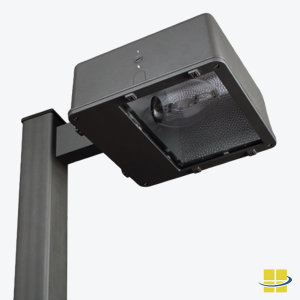
Metal-Halide-Fixture.
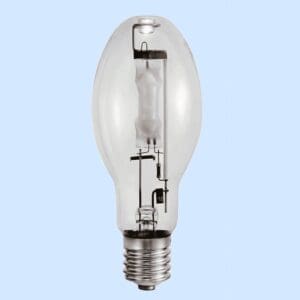
lamps are classified as gas discharge lamps, meaning they generate light by creating an electrical arc in a gaseous mixture of mercury and metal halides. The inner workings of a metal halide lamp are fascinating: they consist of a quartz or ceramic arc tube that contains the gaseous mix, all enclosed within a larger outer bulb. This intricate design allows the lamp to emit a wide spectrum of colors, depending on the specific metal halide compounds used, including metal halide light bulbs.
One of the distinguishing features of metal halide lamps is their ability to emit a bright, intense light. This is achieved through the vaporization of mercury and halide salts within the arc tube, which produces a vivid white light once the lamp reaches full brightness. Ho
arc in a gaseous mixture of mercury and metal halides. The inner workings of a metal halide lamp are fascinating: they consist of a small fused silica (quartz) or ceramic arc tube that contains the gases and the arc, all enclosed within a larger outer glass bulb. The arc tube is hermetically sealed to maintain the integrity of the internal environment and to contain the fill gases and metal halide components. Key components of the lamp include the arc tube, electrodes, fill gases (such as argon and mercury vapor), and various metal halide compounds. The diameter of the arc tube is an important parameter, as it affects light coupling efficiency and overall optical performance. The electrodes are sealed within the lamp using specialized techniques to ensure electrical insulation and durability under high temperature and pressure. The shape of the lamp and its electrodes is carefully designed to optimize stability, thermal management, and optical alignment. Some metal halide lamps are single-ended, with one electrical connection, while others are double-ended, featuring metal sleeves at both ends for enhanced support and electrical connection. Certain lamp types offer a universal burn position, allowing flexible orientation in enclosed luminaires. Maintaining the correct operating temperature is critical for optimal lamp performance, spectral output, and longevity. This intricate design allows the lamp to emit a wide spectrum of colors, depending on the specific metal halide compounds used, including metal halide light bulbs.
One of the distinguishing features of metal halide lamps is their ability to emit a bright, intense light. This is achieved through the vaporization of mercury and halide salts within the arc tube, which produces a vivid white light once the lamp reaches full brightness. However, this process isn’t instantaneous. Metal halide lamps require a warm-up time of several minutes to reach their full brightness, which can take up to five minutes. The warm-up period allows the lamp to stabilize and produce consistent light output.
In summary, metal halide lamps are a vital part of the lighting industry, offering a unique combination of brightness and color versatility. Their design and operation set them apart from other gas discharge lamps, making them a popular choice for applications ranging from street lighting to large indoor spaces, including metal halide light solutions.
History and Evolution of Metal Halide Lamps
The journey of metal halide lamps began with Charles P. Steinmetz, who first explored the idea of enhancing mercury vapor lamps with halide salts. This pioneering research laid the groundwork for the development of more efficient and versatile lighting solutions. The first reliable metal halide lamp was developed in 1962, marking a significant milestone in the history of lighting technology. This innovation quickly gained traction, and by 2005, metal halide lamps had become extremely popular, with a noticeable increase in sales.
Over the decades, metal halide lamps have continuously evolved, incorporating advancements in materials and design to improve performance and reliability. Manufacturers have played a key role in these improvements by implementing rigorous quality control and introducing design innovations that enhance lamp quality, performance, and reliability. These enhancements have solidified their place in the lighting industry, making them a go-to choice for a variety of applications. The evolution of metal halide lamps reflects the broader trends in lighting technology, where innovation and efficiency drive the development of new solutions.
How Do Metal Halide Lamps Work?
At the heart of metal halide lamps lies a fascinating process of light production. These metal halide bulbs are high-intensity discharge (HID) lamps that generate light through an electrical arc created in a gaseous mix of mercury and metal halides, including iodine. The journey begins with an electrical current passing through argon gas, which helps initiate the arc. During the burning or ignition phase, a high voltage is required to start the arc, and ballasts play a critical role by providing this voltage and regulating current flow throughout operation. As the lamp heats up, the mercury inside vaporizes, allowing the arc to travel through the gas and the light source to produce bright, white light ideal for various commercial and industrial applications. The arc tube operates at high pressures, typically between 4 and 20 atmospheres, and the electrodes are made from tungsten and hermetically sealed within the lamp shafts.
The role of halide salts in this process is crucial. These compounds, such as iodine, not only improve the color rendering of the light but also help protect the two electrodes from damage during operation. As the halides vaporize, they contribute to the production of bright white light and various color temperatures, a characteristic feature of metal halide lamps. The color temperature of a metal-halide lamp can vary from 3000K to over 20000K, and during warm-up or under certain electrical conditions, the spectral output may shift towards a blue or green hue. The entire process, from ignition and burning in to full brightness, typically takes between one and fifteen minutes, depending on the specific lamp.
Another critical component of metal halide lamps is the use of fused quartz in the arc tube. This material can withstand the high temperatures generated during operation, ensuring the lamp’s durability and performance. The arc tube and components undergo significant heating, and proper cooling is required, especially at the stem seals where molybdenum foils are embedded, to maintain safe operating temperature and prevent damage. Stable current flow and voltage are essential for maintaining arc stability and optimal lamp performance, with the electrical characteristics—such as voltage, current, and impedance—directly influencing the spectral output and longevity of the lamp. Metal halide lamps typically have a lifespan ranging from 6,000 to 15,000 hours. However, caution is necessary when handling these lamps, as their extended re-light time after being turned off requires careful inspection.
Advantages of Using Metal Halide Lamps
Metal halide lamps offer several advantages that make them a preferred choice in various settings. They are often selected to meet specific lighting needs in commercial and industrial environments due to their high luminous efficacy of 75–100 lumens per watt and their ability to deliver high CRI white light.
Metal Halide to LED Conversion Calculator
Their superior color rendering is a key benefit. With a color rendering index (CRI) typically exceeding 80, these lamps allow for accurate color representation, making them ideal for applications that require high-quality lighting. Whether used indoors or outdoors, metal halide lamps provide a high CRI white light quality that surpasses many other lighting technologies. They also produce a bright, white light that is comparable to actual daylight and offer more uniform irradiance than mercury lamps, which is especially beneficial for applications requiring consistent light output.
Another significant advantage is the intense brightness produced by metal halide lamps. This feature enhances visibility and security in large open areas such as stadiums and parking lots. Metal halide bulbs also have a longer lifespan compared to incandescent bulbs, typically lasting between 6,000 to 15,000 hours. The versatility of metal halide lamps in different environments further adds to their appeal, making them a reliable choice for a wide range of lighting applications.
Disadvantages of Metal Halide Lamps
Despite their numerous advantages, metal halide lamps also come with certain drawbacks. One of the main disadvantages is the warm-up time required to reach full brightness, which can range from 1 to 15 minutes. Additionally, these lamps necessitate a cool-down period before they can be restarted after a power interruption, which can be inconvenient in some situations. Metal halide bulbs require adequate cooling, especially at the stem seals where molybdenum foils are embedded, to prevent overheating and ensure safe operation.
Another concern is the potential emission of UV radiation, which can damage nearby materials and surfaces if the lamp is damaged. Metal halide lamps can also become extremely hot during operation, reaching temperatures of around 2000 degrees Fahrenheit. In rare cases, these lamps may experience failures such as explosions or cycling on and off, particularly at the end of their lifespan. New lamps may occasionally fail early due to manufacturing defects, and such lamps should be replaced promptly. This high heat, combined with the presence of hazardous substances like mercury, poses environmental risks if the lamp is broken or improperly disposed of.
Stop Waiting for Your Lights to Warm Up. > Eliminate the 15-minute warm-up and the risk of arc tube failure. Switch to instant-on LED technology that runs 80% cooler.
Browse LED Retrofit Kits
Comparing Metal Halide Lamps with Other Lighting Technologies
When comparing metal halide lamps with other lighting technologies, such as mercury vapor lamps and LED lighting, several factors come into play. These include luminous efficacy, lifespan, energy efficiency, and the quality of light produced from the most efficient sources.
After: When comparing metal halide lamps with other lighting technologies, consider the following factors:
- Luminous efficacy
- Lifespan
- Energy efficiency
- Quality of light produced
In the next sections, we’ll delve deeper into these comparisons to provide a clearer understanding of how metal halide lamps stack up against these alternatives.
Metal Halide vs. Mercury Vapor Lamps
Metal halide lamps emit a higher intensity light compared to mercury vapor lamps, making them preferable for applications requiring bright illumination. With a luminous efficacy ranging from 75 to 100 lumens per watt, metal halide lamps are significantly more efficient than mercury vapor lights, which are less efficient. This higher efficacy means that metal halide lamps can produce more light while consuming less electricity.
In terms of color rendering, metal halide lamps generally offer superior performance compared to mercury vapor lamps. However, mercury vapor lamps typically have a longer lifespan, which can be an advantage in certain applications. Despite this, the better color quality and higher efficiency of metal halide lamps make them a more attractive option for many uses. As an example, the Sylvania Metalarc M100/U/MED 100 Watt Metal Halide Bulb has an initial lumen output of 8,500, a mean lumens of 4,675, operates at a color temperature of 4000K, and has a CRI of 65.
Metal Halide vs. LED Lighting
LED lighting has revolutionized the lighting industry with its increased energy efficiency, long lifespan, and eco-friendliness. Unlike metal halide lamps, LED lights can provide instant full brightness without a warm-up period, making them more convenient for many applications. LEDs also operate with minimal heat production and can emit light, further enhancing their energy efficiency.
However, the initial cost of LED lights is higher compared to metal halide lamps. Despite this, the energy savings and reduced maintenance costs associated with LED lighting often outweigh the higher upfront investment. Additionally, LED systems do not require a ballast for operation, simplifying their installation and maintenance.
Applications of Metal Halide Lamps
Metal halide lamps have become a highly reliable source of light with a broad range of applications. They are frequently used to illuminate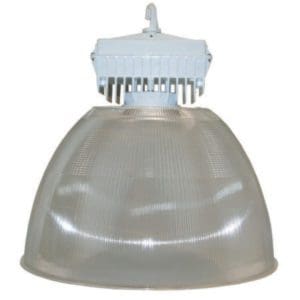 large outdoor areas such as sports arenas, sports fields, parking lots, and street lights, where their intense brightness and wide coverage are essential. These lamps are also suitable for public spaces lighting, providing bright illumination over a wide area, and overhead lighting.
In addition to outdoor applications, metal halide lamps are utilized in various settings, both indoors and outdoors, including warehouses, factories, large retail spaces, retail stores, and industrial facilities, as well as in commercial applications. Their ability to provide high-quality light makes them a popular choice for environments where accurate color representation is important. Metal halide lamps are also used in photographic lighting and stage lighting fixtures, as well as for indoor growing applications such as cannabis cultivation and in reef aquariums.
Furthermore, metal halide lamps are commonly found in automotive headlamps, such as xenon headlights, enhancing visibility for drivers. In specialized applications like microscopy, metal halide lamps can be integrated into the optical system, often with elliptical reflectors, to focus light output and provide efficient, high-intensity illumination for imaging and fluorescence microscopy setups.
Don’t guess on your beam angles.
Converting from HID to LED changes how light hits the ground. Our engineers can provide a Professional Photometric Analysis to guarantee your new LEDs meet your facility's requirements.
Request a Free Photometric Study
Maintenance and Safety Tips for Metal Halide Lamps
Proper maintenance is crucial for ensuring the longevity and safe operation of metal halide lamps. Regular maintenance, including shutting off lamps for short periods, helps reduce heat buildup and prolongs lamp life. It’s essential to monitor for signs of wear, such as excessive blackening, swelling of the arc tube, sudden changes in light color, or cycling on and off, which may indicate that a lamp should be replaced.
At the end of their life, metal halide lamps may lose output, change color, or stop working altogether. In some cases, they might cycle on and off, posing a risk of explosion. Therefore, it’s important to replace aging lamps promptly to avoid potential hazards.
Additionally, metal halide lamps require a ballast to regulate the electrical current needed for starting and maintaining the electric arc. The cool-down period after a power cut is approximately 5 to 10 minutes, during which the lamp cannot be restarted. Following these maintenance and safety tips ensures that metal halide lamps operate safely and efficiently.
Tired of the 10,000-hour replacement cycle?
Our EXTREME-LIFE LEDs are rated for over 100,000 hours. Speak with an Access Fixtures specialist at 800-468-9925 to find a maintenance-free solution for your facility.
Retrofitting Metal Halide Lamps with Modern Alternatives
The development of ceramic metal halide lamps marked a significant evolution in lighting technology, offering advancements in color control for high-intensity discharge lamps. As lighting technology continues to advance, many are looking to retrofit their existing metal halide lamps with more modern alternatives like fluorescent, compact fluorescent lighting (CFL), and LED, as well as additional metal halide compounds. These alternatives offer various benefits, including energy efficiency and longer lifespans.
Retrofitting metal halide lamps with LED lamps is a common practice. This process often involves bypassing or removing the magnetic ballast used for metal halide operation. By retrofitting with LEDs, users can achieve significant energy savings and reduce the frequency of lamp replacements, making it a cost-effective and environmentally friendly choice.
How much will you actually save? > Don't guess on your energy reduction. Use our Metal Halide to LED Conversion Calculator to see your specific ROI based on your local electricity rates.
Conclusion
In summary, metal halide lamps have played a pivotal role in the lighting industry, offering bright, high-quality light for a variety of applications. Their superior color rendering and intense brightness make them ideal for both indoor and outdoor environments. However, they also come with certain drawbacks, such as the need for a warm-up period and potential UV radiation emission.
As lighting technology continues to evolve, alternatives like LED lighting offer increased energy efficiency, longer lifespans, and eco-friendliness. Retrofitting metal halide lamps with modern alternatives can provide significant benefits in terms of energy savings and reduced maintenance costs. By understanding the pros and cons of metal halide lamps, you can make informed decisions about the best lighting solutions for your needs.
Frequently Asked Questions
What are metal halide lamps?
Metal halide lamps are high-intensity discharge (HID) lamps that generate light by creating an electrical arc in a mixture of mercury and metal halides. They are known for their bright illumination and efficiency, making them ideal for various applications.
How do metal halide lamps compare to LED lighting?
Metal halide lamps provide a lower initial cost and good color rendering, but LED lighting is superior in energy efficiency, longevity, and immediate brightness. Therefore, for long-term savings and performance, LED lighting is the preferred choice.
What are the main advantages of using metal halide lamps?
The main advantages of using metal halide lamps are their superior color rendering, intense brightness, and versatility for a variety of indoor and outdoor applications. These features make them an excellent choice for enhancing visibility and color accuracy in different environments.
What are the maintenance requirements for metal halide lamps?
Regular maintenance of metal halide lamps involves shutting off the lamps to prevent heat buildup, monitoring for wear, and timely replacement of aging lamps to mitigate potential hazards.
Can metal halide lamps be retrofitted with modern alternatives?
Yes, metal halide lamps can be retrofitted with modern alternatives like LED lamps by bypassing or removing the ballast. This upgrade enhances energy efficiency and light quality.