
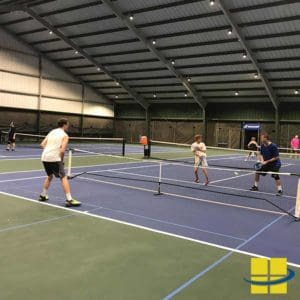
 A returning customer from outside Houston, TX, contacted Access Fixtures in search of an indoor tennis court lighting upgrade. A few months prior, the customer had installed Access Fixtures LED luminaires on their outdoor tennis courts. They were thrilled with the results of the outdoor courts and wanted to achieve the same light on two additional, covered courts on their property.
The project required careful site development and planning to ensure the new lighting system would be properly integrated with the existing covered courts and their unique structure.
Prior to any recommendations, the Access Fixtures team gathered relevant information from the customer to ensure we could provide the most accurate indoor tennis court lighting results possible. This information included ceiling height, current number of installed fixtures, fixture arrangement, Kelvin temperature, voltage,
amount of ambient light, requirements of options such as occupancy sensors and dimming, and more. To appropriately light this tennis court, we knew how important it was to address and evaluate all of these factors. Using indoor tennis court lights, which are ceiling-mounted LED fixtures, would help achieve the desired lighting results.
Revamping the current indoor tennis court lighting meant replacing the community’s fifty-two existing 400-watt pulse-start metal halide fixtures. With this many fixtures dedicated to the twin tennis courts, a one-for-one swap of the existing units would create a phenomenally even lighting solution. Knowing one of the main goals of the project was to create lighting comparable to the existing outdoor courts, we knew this was the kind of lighting the customer was looking for. There were no bleachers indoors, which meant the priority was to just light the two courts themselves. The courts, which measured a total of 120 by 108 feet, were covered by a metal structure. The customer did not know the exact height of the structure, but was able to measure some of the lower wall panels. These measurements allowed our team to use some basic trigonometry to calculate the pitch and height of the roof.
Introduction to Indoor Tennis Court Lighting
Indoor tennis court lighting is a crucial aspect of creating a safe and enjoyable playing experience for tennis enthusiasts. Tennis is a fast-paced sport that demands specialized lighting solutions to support both recreational and competitive play. Proper lighting can enhance visibility, reduce eye strain, and improve overall performance. With the advancement of technology, LED lighting has become a popular choice for indoor tennis facilities due to its energy efficiency, longevity, and high-quality light output. LED lighting ensures that players can see the ball clearly, react quickly, and play their best game, regardless of the time of day or weather conditions outside. In this section, we will explore the benefits and best practices of indoor tennis court lighting.
Tennis Court Construction Considerations
Constructing a high-quality tennis court involves careful planning and attention to a range of essential factors to ensure a safe, durable, and enjoyable playing environment. One of the first decisions in tennis court construction is selecting the right surface material. Options such as concrete, asphalt, and synthetic surfaces each offer unique benefits and challenges. Concrete courts are known for their long-term durability and consistent performance, making them a popular choice for tennis facilities seeking a low-maintenance, high-quality playing surface. However, concrete can be more costly to install and may require specialized maintenance over time. Asphalt courts are often more budget-friendly and quicker to install, but they may need more frequent resurfacing to maintain optimal playability, especially in regions with extreme weather conditions like Houston, Texas.
Lighting is another critical component of tennis court construction. Modern LED tennis court lights are essential for providing even light distribution, superior visibility, and energy efficiency. Integrating a high-performance LED lighting system during the construction phase ensures that the courts are ready for year-round play, including evening and night matches. LED lighting upgrades not only enhance the playing experience for athletes and spectators but also deliver significant energy savings and lower maintenance costs over the long run. By working with experienced sports field lighting contractors, tennis facilities can design and install lighting systems that meet the specific needs of their courts, whether indoor or outdoor.
Proper drainage and irrigation systems are also vital to the longevity and safety of tennis courts. Effective drainage prevents water accumulation, reducing the risk of surface damage and player injuries, while a well-designed irrigation system helps maintain the ideal moisture level for certain court surfaces. These systems are especially important in areas like Houston, where heavy rainfall and humidity can impact court conditions.
Beyond the playing surface and lighting, the overall layout and amenities of the tennis facility play a significant role in the quality of the playing experience. This includes installing durable fencing, high-quality nets, and providing comfortable seating areas for spectators. The design should also consider easy access to essential amenities such as restrooms, locker rooms, and concession stands, ensuring convenience for players, coaches, and fans alike.
For indoor tennis courts, additional considerations such as climate control, ventilation, and acoustic insulation are crucial. These features help create a comfortable, distraction-free environment that supports peak athletic performance regardless of the season or weather outside.
In Texas, and particularly in Houston, tennis court construction must account for the region’s hot, humid climate. Selecting materials and lighting systems that can withstand local weather conditions is key to ensuring long-term durability and consistent court quality. Consulting with sports field lighting contractors and tennis court construction professionals can help facilities choose the best solutions for their specific needs, from surface materials to advanced LED lighting systems.
Ultimately, successful tennis court construction is about more than just building a playing surface; it’s about creating a complete, high-performance environment that supports athletes, enhances the game, and stands the test of time. By prioritizing quality, energy efficiency, and expert installation, tennis facilities can deliver an exceptional playing experience for years to come.
Photometric Design Goals
To be sure the light levels would match or exceed those of the outdoor courts, the Access Fixtures team ran this photometric analysis. The aim for the indoor tennis court lighting layout was to achieve approximately 55 footcandles throughout the playing area. Foot candles are a key measurement for determining adequate lighting levels on tennis courts, ensuring proper illumination for both players and spectators. We had a good idea of what high bay fixture would make an appropriate replacement for the 400-watt PSMH fixtures; the results of the photometric analysis did not disappoint. The report came back promising 62 average FC and 91 maximum FC across the playing areas of both courts.
Benefits of LED Lighting for Indoor Tennis Courts
LED lighting offers numerous benefits for indoor tennis courts, making it the preferred choice for modern sports lighting solutions. One of the most significant advantages is energy cost savings. LED lights consume significantly less energy than traditional lighting sources, resulting in lower energy bills and a reduced carbon footprint. This makes them an environmentally friendly option that also helps facility managers save on operational costs.
Another key benefit is the longer lifespan of LED lights. Unlike traditional lighting sources that require frequent replacements, LED lights have a much longer operational life, reducing the need for constant maintenance and replacements. This longevity translates to lower maintenance costs and less downtime for the courts.
LED lights also provide improved visibility. They offer high-quality, uniform lighting that enhances visibility across the entire playing area, reducing eye strain for players and spectators alike. This uniformity ensures that there are no dark spots or overly bright areas, creating a consistent and comfortable lighting environment.
Increased safety is another crucial benefit of LED lighting. By providing clear visibility of the court and surrounding areas, LED lights help reduce the risk of accidents and injuries. Players can see the ball and their opponents more clearly, leading to a safer and more enjoyable playing experience.
Lighting Solution
Before running any photometrics for this indoor tennis court lighting setup, Access Fixtures explored some options with the customer. First was deciding whether they preferred uplighting or downlighting. Uplighting would reduce glare and offer unique mounting possibilities, while downlighting would provide more direct lighting to the playing area. Indirect lighting minimizes glare by directing light upwards towards reflective surfaces, creating a uniform and high-quality illumination that enhances visibility and overall playing conditions. Their existing PSMH fixtures were hung as downlights, and after discussing each available option, the housing community decided that they were happy to proceed with the same downlighting format.
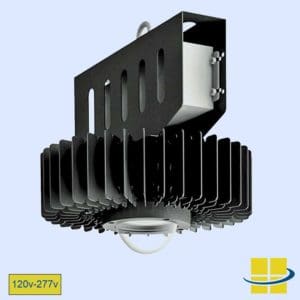
The KOTA family of LED fixtures is ideal for applications such as detailing shops, commercial facilities, retail buildings, inventory warehouses, sporting applications, and more. The KOTA 185 LED high bay was the perfect choice for this covered double tennis court application. The fixture is incredibly powerful, delivering up to 20,324 lumens, and it is rated at 100,000 hours (over eleven years if run nonstop). One aspect of the KOTA 185w high bay fixture that makes it stand out from the crowd is its patented heat sink and passive cooling system. The KOTA has an unmatched ability to redistribute heat by removing any heat from the COB LED area, ensuring crucial components are kept cool and functioning at full capacity. LED sports lighting offers significant advantages for various sports facilities, including energy efficiency and durability.
KOTAs feature just one LED per fixture, which may sound strange or hard to believe. However, this one LED far outperforms regular LED chips, largely due to its heat dispersion tunnel that allows heat to escape. This heat dispersion boosts the lifetime of the fixture, which makes for less fixture downtime and more consistent performance overall. Each KOTA has a standard rating of IP65, making it ideal for use in the steel-built structure, where dust and moisture ingress are sometimes a factor. Though the space was enclosed, the IP rating meant that there would be no issue if dust or moisture came in contact with the fixtures.
Mounting the KOTA 185-w high bays for use in indoor tennis court lighting is simple. These fixtures come standard with an adjustable mounting arm or eye-hook; pole-top mounting is also available. This customer chose the standard eye-hook mounting option, which made it easy to hang the fixtures from the ceiling. Given the number of fixtures, they didn’t need to be aimed or pointed anywhere but straight down; the hook mount was the perfect option for this project. If your project has a unique mounting requirement, let our lighting specialists find a solution for you. Access Fixtures has an unspeakably wide range of mounting brackets; call us today to determine the best mount for your project. Our team will also help you navigate the tricky territory of EPA ratings, wind loads, weight restrictions, and more. We can run a photometric report for your layout so you can see exactly the kind of light you’ll get from your KOTA fixtures.
Overall, these fixtures are extremely versatile, powerful, and efficient, making this the dream fixture for this and many projects.
How Many Fixtures Were Needed?
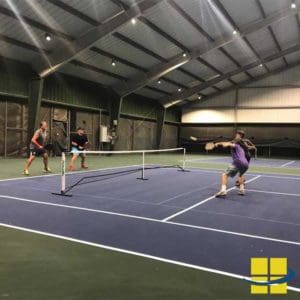 Simulating the results with a photometric analysis not only allowed the customer to better understand the results this project would achieve, but it also allowed the Access Fixtures lighting team to work closely with the customer to ensure that doing a one-for-one replacement on the existing fixtures would provide sufficient light for the covered double tennis court. Providing accurate suggestions and results before purchasing or installation is crucial. This indoor tennis court lighting project was a big investment for this housing community, and they wanted to ensure they got it absolutely right. Tailored lighting systems for various sports facilities are essential to enhance player performance and ensure safety during activities.
Access Fixtures also provides ongoing service and support to ensure the lighting system continues to perform optimally after installation.
To accommodate the size of the space, the angle of the roof, and the playing area of the double tennis court, we used KOTA to replace all fifty-two pulse-start metal halide fixtures.
The Indoor Tennis Court Lighting Answer
Once we had selected the fixture, run a photometric analysis, and educated the customer on the details, he was able to present the package to his board. The proposal passed with ease. The lighting solution is also highly applicable and advantageous for indoor sports facilities due to its brightness, uniform light distribution, and energy efficiency. The board’s only request was for an estimated lead time; they were planning to resurface the courts and wanted an idea about the timeline so they could schedule the resurfacing.
This customer came to Access Fixtures looking to achieve a similar lighting solution to another part of their facility’s tennis playing area. In just a few weeks, Access Fixtures lighting specialists had gathered every necessary detail about their space and requirements, ensuring accurate information and results.
The outcome of this project was exactly what the customer had imagined. The customer and his team were delighted with the results of their new double tennis court lighting solution. He and his team were so happy with the solution and support from our lighting specialists, he agreed to be a reference for another one of our customers.
Common Challenges in Indoor Tennis Court Lighting
Indoor tennis court lighting can pose several challenges that need to be addressed to ensure optimal performance. One common issue is insufficient lighting. Poorly lit courts can lead to poor visibility, making it difficult for players to see the ball and their opponents. This can result in eye strain, reduced performance, and a less enjoyable playing experience.
Glare and reflections are another challenge. Improperly positioned lights can cause glare, which can be distracting for players and spectators. Reflections from shiny surfaces can also create visual disturbances, affecting the players’ ability to focus on the game.
Maintenance and upkeep of traditional lighting sources can be time-consuming and costly. Traditional lights often require frequent maintenance and replacements, which can disrupt the use of the courts and increase operational costs. Ensuring that the lighting system is always in optimal condition requires regular attention and resources.
Best Practices for Indoor Tennis Court Lighting Maintenance
To ensure optimal performance and longevity of indoor tennis court lighting, it is essential to follow best practices for maintenance. Regular cleaning of lights and fixtures is crucial to prevent dust and dirt buildup, which can reduce light output and efficiency. Clean fixtures ensure that the lighting remains bright and effective.
Scheduled maintenance checks are also important. Regular inspections can help identify and address potential issues before they become major problems. This proactive approach can prevent unexpected failures and ensure that the lighting system remains reliable.
Upgrading to LED lighting is a highly recommended practice. LED lights not only reduce energy consumption but also have lower maintenance needs compared to traditional lighting sources. This upgrade can result in significant cost savings and improved lighting quality.
Conducting regular lighting audits is another best practice. These audits help ensure that the lighting levels and uniformity are optimal for the playing area. By assessing the current lighting conditions, facility managers can make informed decisions about necessary adjustments or upgrades.
By following these best practices and considering the benefits of LED lighting, indoor tennis facilities can create a safe, enjoyable, and energy-efficient playing experience for tennis enthusiasts. Proper maintenance and upgrades ensure that the lighting system remains effective and reliable, providing the best possible environment for players and spectators.
Speak to an Access Fixtures Lighting Specialist
Do you have a tennis court in need of better lighting? Access Fixtures will assign a team to your project who will work closely with you to make sure you receive the ideal solution for your performance and budget requirements. We are passionate about lighting and love what we do—we’ll find the best solution for your project. Call us today at 800-468-9925.
Conclusion
Upgrading to high-performance LED indoor tennis court lighting is a smart investment that enhances the playing experience for athletes and spectators alike. By choosing energy-efficient LED lighting systems, facilities in Houston and beyond can enjoy improved visibility, even light distribution, and significant energy savings. These lighting upgrades not only support year-round play but also offer long-term durability and reduced maintenance costs, making them ideal for clubs, schools, and community centers. Whether you are looking to build courts from the ground up or improve existing facilities, partnering with experienced sports field lighting contractors ensures professional installation, optimal wiring, and lighting layouts tailored to your specific needs. Illuminate your tennis courts with LED technology to provide the best vision and performance for your athletes while contributing to a sustainable and cost-effective future.
Frequently Asked Questions (FAQs) About Houston Tennis Court Lighting
1. What are the benefits of using LED tennis court lights in Houston?
LED tennis court lights offer energy efficiency, longer lifespan, reduced maintenance costs, and superior visibility, making them ideal for Houston’s climate and year-round play.
2. How do I know if my tennis court lighting meets Houston city regulations?
Professional lighting contractors can perform a photometric analysis and ensure your tennis court lighting complies with Houston’s city and Texas UIL standards for brightness and light distribution.
3. Can LED lighting be used for both indoor and outdoor tennis courts?
Yes, LED lighting systems are versatile and can be customized for indoor tennis courts, outdoor courts, and even pickleball courts to provide optimal illumination and performance.
4. How long does it take to install LED tennis court lighting?
Installation time varies depending on the size and complexity of the project, but most standard tennis court lighting upgrades can be completed within one to two days by experienced professionals.
5. What maintenance is required for LED tennis court lighting?
LED lights require minimal maintenance compared to traditional lighting. Regular cleaning and periodic inspections help maintain energy efficiency and optimal light output.
6. Can LED tennis court lighting improve the playing experience for student athletes?
Absolutely. Properly designed LED lighting enhances visibility, reduces glare, and provides even light distribution, which benefits student athletes by improving performance and safety.
7. Are there energy savings associated with switching to LED tennis court lighting?
Yes, LED lighting systems consume significantly less energy than traditional fixtures, resulting in lower energy costs and a reduced environmental footprint over the long run.
8. What factors should be considered when designing tennis court lighting in Houston?
Key factors include court size, mounting height, light distribution, glare control, local weather conditions, and compliance with city and Texas regulations.
9. Can LED lighting be integrated with smart controls for scheduling and dimming?
Yes, many modern LED tennis court lighting systems offer wireless controls, allowing clients to manage lighting schedules, dimming, and energy use remotely for greater convenience and savings.
10. Do you provide tennis court construction services along with lighting installation?
Many lighting specialists also specialize in tennis court construction and renovation, offering comprehensive services including concrete slab installation, surfacing, fencing, and lighting upgrades to build or enhance tennis facilities.