
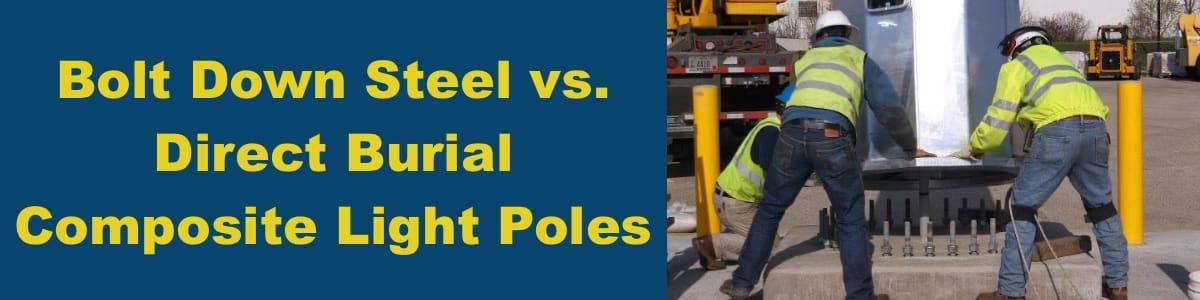
The most consequential decision in any outdoor lighting project isn't the fixture; it's the pole and how it goes in the ground. Bolt-down steel poles and direct burial composite poles each have distinct installation requirements, material strengths, and long-term cost profiles. Choose wrong, and you're excavating in two years. Choose right, and your system runs for decades with minimal maintenance.
This guide covers everything you need to know: installation method, material selection, soil and environmental factors, and when to call a licensed electrician or structural engineer.
Key Takeaways
-
- Bolt-down steel poles require a concrete foundation and anchor bolts but offer superior stability for heavy fixtures and high-wind zones.
- Direct burial composite poles install faster and cost less upfront and resist corrosion naturally, making them the better choice for coastal and high-moisture environments.
- Soil type, wind load, and burial depth are the three variables that determine which method will hold long-term. A 30-foot pole in sandy soil requires at least 6 feet of burial depth.
- All electrical connections must be performed by a licensed electrician. Consult a structural engineer for installations in challenging soil conditions or high-wind zones.
Bolt Down Steel Poles vs. Direct Burial Composite: At a Glance
| Pole Type | Bolt Down Steel Poles | Direct Burial Composite Poles |
|---|---|---|
| Installation Method | Requires a concrete foundation and anchor bolts | Buried directly into the ground |
| Installation Cost | Higher due to foundation and labor costs | Lower, no need for a concrete foundation |
| Installation Time | Longer due to foundation curing | Faster, no foundation required |
| Replacement | Easy to replace with minimal disruption | Harder and costlier to replace once buried |
| Corrosion Resistance | Requires special coatings in coastal areas | Naturally corrosion-resistant |
| Stability | High stability for large fixtures | Adequate but may shift in soft soils |
| Ideal Environment | Urban, industrial, high-traffic areas | Coastal, rural, and high-moisture environments |
| Weight | Heavy, requires more labor and equipment | Lightweight, easier to transport |
| Lifespan | Long-lasting with regular maintenance | Long-lasting with minimal maintenance |
| Typical Cost Profile | Higher upfront concrete foundation, anchor hardware, and longer labor time. The foundation is reusable if the pole needs to be replaced. | Lower upfront, no foundation pour required. Replacement is costly as it requires excavation. |
Planning and Preparation: What to do Before Installation Starts
Before any hole is dug or foundation poured, three things need to be confirmed: the right pole type for the site conditions, the required permits for your municipality, and the correct anchor bolt spec for the foundation design. Getting any of these wrong adds cost, time, and in some cases, a full reinstallation.
Not sure which pole type fits your project? Talk to a lighting specialist at Access Fixtures before you spec. Call 800-468-9925 or shop poles, brackets, and mounts.
How Ground Conditions Affect Installation
Soil type determines burial depth, foundation design, and in some cases, whether a structural engineer needs to be involved. Key factors to assess before installation begins:
- Soil type and stability: loose or sandy soils require deeper burial. A 30-foot pole in sandy conditions should be buried a minimum of 6 feet deep.
- Bearing capacity: weak or unstable soils may require concrete backfill or a redesigned foundation to support pole and fixture weight.
- Drainage and erosion risk: waterlogged or erosion-prone sites can shift or undermine a buried pole over time. Address drainage before installation.
- Wind and seismic load: high-wind zones and seismically active areas require pole specs and burial depths reviewed by a structural engineer.
Permits and Regulations
Permit requirements vary by municipality, but most light pole installations require sign-off in at least one of these areas:
- Electrical permits: required for any hardwired installation. All electrical work must be performed by a licensed electrician.
- Setback and zoning compliance: confirm pole placement meets local setback distances from property lines, roads, and structures.
- Environmental permits: required in sensitive areas or where significant ground disturbance is involved.
- Underground utility clearance: call 811 before any digging to locate buried utility lines. This is a legal requirement in most US states.
Foundation and Anchor Bolt Requirements
The foundation is the most failure-prone part of a light pole installation. A concrete foundation poured to manufacturer specifications, combined with correctly installed anchor bolts, is what keeps a pole upright through wind loads, ground movement, and decades of use.
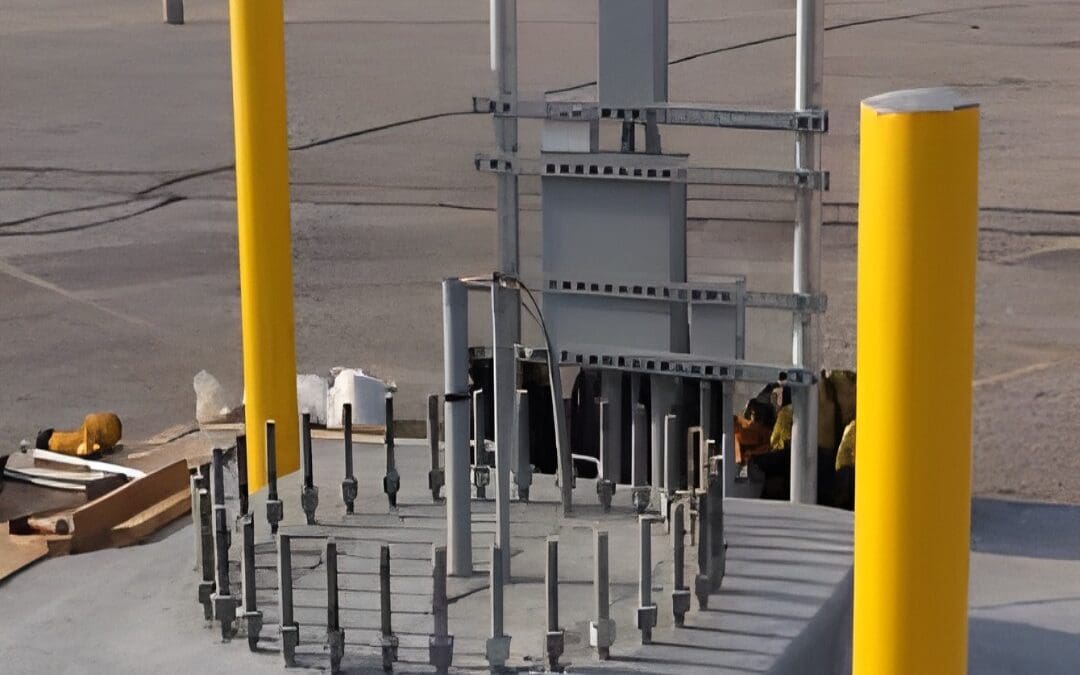
Two installation details that are frequently missed: anchor bolt orientation must be aligned relative to the hand hole so wiring can be routed cleanly through the pole, and the pole must be checked for plumb using a level or plumb bob before the foundation fully cures. Correcting alignment after curing means starting over.
A poorly installed foundation creates compounding problems:
- Physical safety risk: a loose or toppling pole is a direct hazard to people, vehicles, and surrounding property.
- Electrical hazard: improper installation can expose wiring to moisture or mechanical stress, creating shock and electrocution risk.
- Increased maintenance cost: misaligned or under-engineered foundations require frequent re-inspection and repair.
- Full replacement cost: in the worst cases, a failed foundation requires excavation and complete reinstallation.
Installation Methods: Bolt Down vs. Direct Burial
The installation method you choose determines upfront cost, long-term stability, and how difficult the pole will be to replace. Here is how each method works and where each performs best.
Bolt Down Poles
Bolt-down poles are secured to a pre-poured concrete foundation using embedded anchor bolts, leveling nuts, washers, and finish nuts. Use a bolt pattern template during the pour to ensure precise anchor placement. Once the foundation cures, the pole base plate is set over the anchor bolts, leveled, and torqued to spec.
Best for: parking lots, sports fields, urban streets, and industrial areas where stability and heavy fixture support are required.
Advantages:
- Superior stability in high-wind and high-traffic zones due to the concrete foundation
- Easy pole replacement, the foundation stays intact, and the new pole bolts directly onto the existing base
- Supports larger, heavier fixtures such as sports field luminaires
Drawbacks:
- Higher upfront cost due to concrete materials, labor, and foundation curing time
- Requires more planning, heavy equipment, and longer project timelines than direct burial
Direct Burial Poles
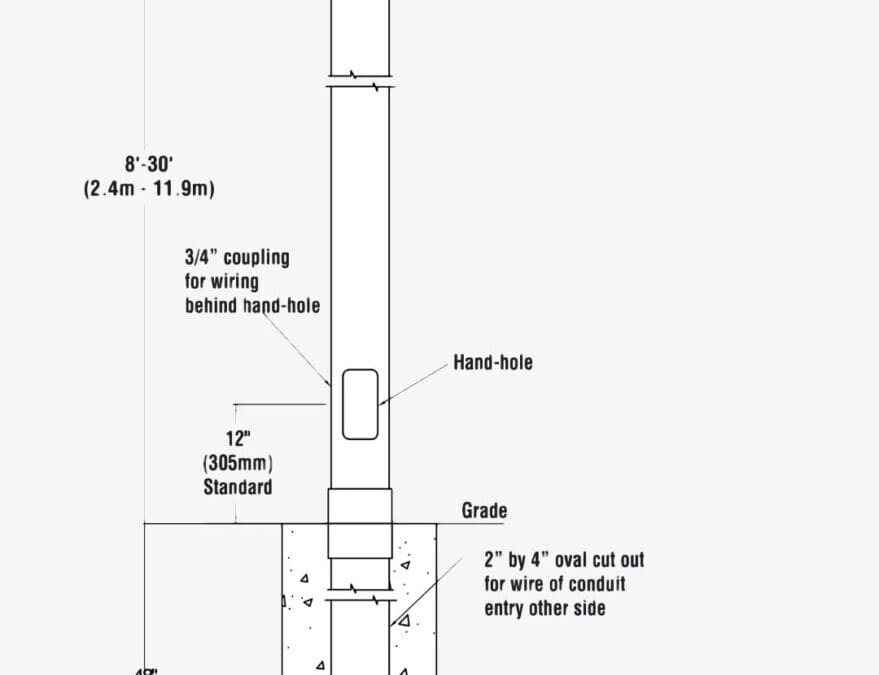
Direct burial poles are set into a pre-dug hole and stabilized with compacted soil, gravel, or concrete backfill. No separate foundation is required. Because the pole is in direct contact with soil, only rust-resistant materials, such as aluminum, fiberglass, or composite, should be used. Tamp and compact backfill in layers as you fill to prevent settling and maintain vertical alignment.
Best for: parks, recreational areas, rural pathways, and coastal or saltwater environments where corrosion resistance and installation speed matter.
Advantages:
- Faster installation with no foundation pour or curing period required
- Lower upfront cost due to fewer materials and less labor
- Natural corrosion resistance when using aluminum, fiberglass, or composite poles
Drawbacks:
- Harder to replace once buried, removal requires excavation and is significantly more labor-intensive than swapping a bolt-down pole
- Less stable in soft or shifting soils without additional engineering
Need help choosing the right pole for your project? Talk to an Access Fixtures lighting specialist at 800-468-9925 or shop poles, brackets, and mounts.
How to Choose the Right Light Pole for Your Project
Pole selection comes down to four variables: material, installation method, fixture load, and site conditions. Get those four right and everything else follows. The sections below cover each pole type, where it performs best, and what to watch out for.
Light Poles Types and Where Each Performs Best
The three most common pole materials for commercial and municipal installations are steel, aluminum, and fiberglass. Each has a distinct performance profile based on environment, load requirements, and maintenance expectations. Check local regulations for pole height requirements before finalizing your spec.
Common types of light poles include:
- Steel Poles: offer the highest load-bearing capacity and are the standard choice for urban streets, parking lots, and sports facilities. They are prone to corrosion in coastal or high-moisture environments unless treated with galvanization or a protective coating. Multi-section steel poles require conduit assembly during installation to route wiring cleanly through the shaft.
- Aluminum Poles: are lightweight, naturally corrosion-resistant, and well-suited for coastal, high-moisture, and direct burial applications. They offer a lower strength-to-weight ratio than steel, so they are not recommended for high-wind zones or applications requiring support of heavy fixture arrays.
- Fiberglass Poles: are durable, low-maintenance, and naturally resistant to corrosion, making them a strong choice for parks, recreational areas, and coastal direct burial installations. They are not recommended for high-temperature environments, as sustained heat can affect structural integrity over time.
Access Fixtures offers 4-inch and 5-inch poles in 20, 25, and 30-foot heights in both steel and fiberglass. Standard poles are ready to ship. Custom poles, including custom heights, heavy gauge, high wind ratings, and special cuts, carry different lead times. Call 800-468-9925 to confirm availability for your project.
Key Selection Factors
- Fixture load: Confirm the pole's EPA (effective projected area) rating can support your fixture in the highest expected wind speed for the site.
To calculate the total EPA load on a pole, multiply the EPA of each fixture by the number of fixtures, add the product of the mounting hardware EPA and the number of hardware pieces, then add the EPA of any wires, signs, or additional equipment. Every pole has a maximum EPA rating. Exceeding it compromises structural integrity and may violate local building codes.
- Material and environment: match pole material to site conditions, steel for urban and industrial, aluminum or fiberglass for coastal and high-moisture.
- Installation method: bolt-down for stability and replaceability, direct burial for speed and lower upfront cost.
- Height and setback compliance: Verify pole height meets local regulations before ordering.
- Budget: factor in foundation costs, hardware, labor, and electrical connection. Underground electrical work requires a licensed electrician regardless of pole type.
Material Comparison: Steel vs. Composite Poles
Steel and composite poles serve different environments and project requirements. The right choice depends on fixture load, site exposure, and how much long-term maintenance your team can support. Below is a detailed breakdown of where each performs best.
Steel Poles
Best for: urban streets, parking lots, industrial zones, sports facilities, and any application requiring support of heavy fixture arrays in high-wind conditions.
Advantages:
- The highest load-bearing capacity of any pole material supports large, heavy fixtures and multi-arm configurations
- Customizable to specific heights, wall thicknesses, and EPA ratings
- Long lifespan with galvanization or protective coating, decades of service with periodic inspection
Drawbacks:
- Corrosion risk in coastal or high-salinity environments without anti-corrosive treatment, such as galvanization, adds cost and requires periodic maintenance
- Heavier than composite or aluminum, requiring more labor and equipment to transport and install
- Higher total project cost when foundation, anti-corrosion treatment, and installation equipment are factored in
Composite Poles
Best for: coastal and high-moisture environments, parks, recreational areas, and solar lighting projects where corrosion resistance and low maintenance are priorities.
Advantages:
- Naturally corrosion-resistant, no coatings or treatments required, even in saltwater environments
- Lightweight construction reduces labor and transport costs compared to steel
- Low maintenance over the life of the installation, no rust, no recoating
- Compatible with direct burial installation; backfill with compacted soil, gravel, or concrete for stability
Drawbacks:
- Lower load-bearing capacity than steel, not suitable for heavy fixture arrays or high-wind zones without additional engineering
- Less stable in soft or shifting soils; may require concrete backfill or deeper burial to compensate
All Access Fixtures poles are finished with a baked-on polyester powder coat for rust and corrosion resistance. Custom RAL color matching is available for projects requiring poles to match an existing environment or fixture finish.
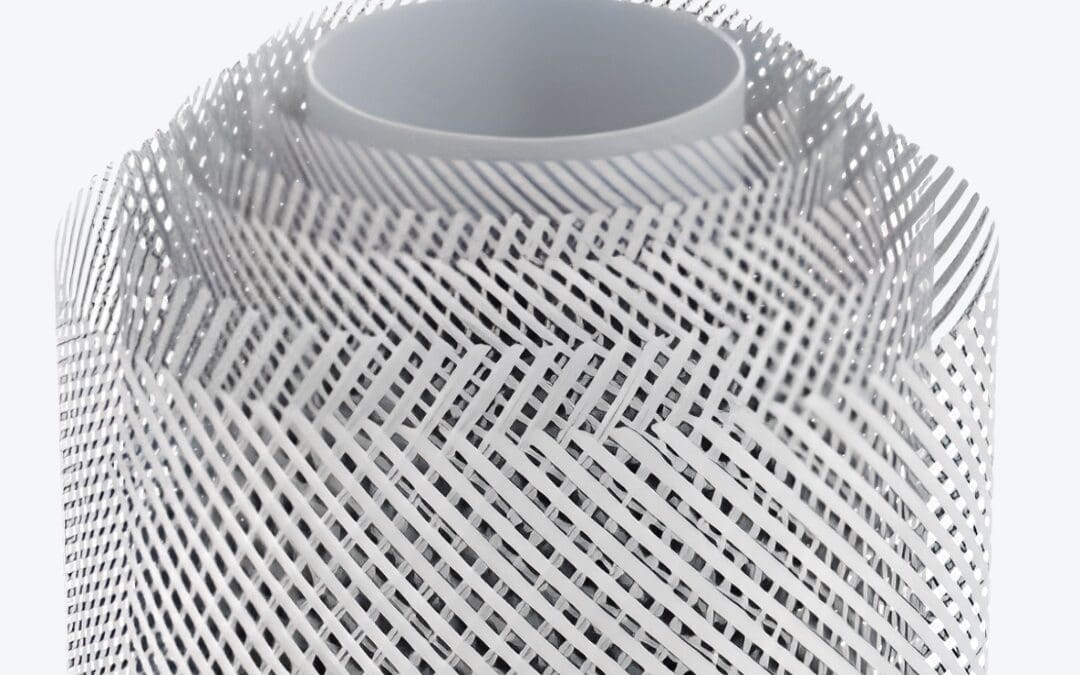
Access Fixtures composite poles are constructed from polyurethane resin and E-glass fiber rovings with integrated UV protection. They are available pre-drilled and pre-assembled to reduce on-site installation time. Call 800-468-9925 to discuss pole specs with a lighting specialist.
Environmental and structural factors that affect installation
Site environment has a direct impact on pole material selection, burial depth, foundation design, and long-term maintenance requirements. The four conditions that most commonly affect installations are sandy soil, saltwater or coastal exposure, high-wind zones, and challenging structural conditions that require engineering review.
Sandy Soils
Sandy soil has low bearing capacity and shifts under load. For direct burial poles in sandy conditions, use the standard burial depth formula: 10% of pole height plus 3 feet. A 30-foot pole requires a minimum burial depth of 6 feet. Use gravel or concrete backfill rather than loose sand to stabilize the base, and compact in layers as you fill.
Foundation requirements vary significantly by location. In parts of Florida, local code calls for a 30-inch diameter pier with a reinforcing rebar cage in an 8 to 10-foot deep Sonotube. In Georgia, poles under 50 feet are recommended to have a 24-inch diameter, 6-foot deep reinforced concrete foundation. Always confirm requirements with a local structural engineer before pouring.
Coastal and saltwater environments
Salt air accelerates corrosion on untreated steel. For coastal installations, composite, aluminum, or fiberglass poles are the preferred choice; all three are naturally corrosion-resistant and suitable for direct burial without additional treatment. If steel is required, galvanization is the minimum protection standard, and the finish will need periodic inspection and recoating over time.
Wind Load
High-wind zones require poles with a wind load rating that matches or exceeds the site's design wind speed. Bolt-down steel poles on concrete foundations provide the most reliable performance in these conditions. Direct burial poles in high-wind zones require deeper burial and, in some cases, concrete backfill and additional anchoring. Confirm the pole's EPA rating against your site's wind speed requirements before ordering.
- For poles over 25 feet in high-wind zones, wind-induced vibration is an additional concern. Sustained vibration can cause weld fractures between the base plate and pole shaft. If your project involves tall poles in a windy location, contact an Access Fixtures lighting specialist at 800-468-9925 to discuss vibration mitigation options.
When to Involve a Structural Engineer
Not every installation requires engineering review, but some do. Engage a structural engineer when your project involves any of the following:
- Soft, sandy, or unstable soil conditions where standard burial depths may not provide sufficient stability
- High-wind zones where pole EPA ratings and foundation design need to be verified against local building codes
- Heavy fixture loads on tall poles, where load-bearing calculations are required
- Coastal or corrosive environments where material and coating specifications need to be validated for long-term performance
For complex projects, an Access Fixtures lighting specialist can help you identify what engineering review is needed. Call 800-468-9925.
Maintenance and Safety Considerations
Both bolt-down and direct burial poles require periodic inspection to remain safe and code-compliant. Inspection frequency depends on site conditions; coastal and high-wind locations warrant annual review, while sheltered inland installations may require less frequent checks. At a minimum, inspect for the following after severe weather events:
- Anchor bolt corrosion or loosening on bolt-down poles
- Ground settlement or heave around direct burial poles
- Visible corrosion on the pole shaft, especially at the soil line
- Fixture alignment and mounting hardware integrity
- Conduit seals and wiring access point condition
Conclusion
Bolt-down steel poles are the right choice for urban, industrial, and high-traffic environments where stability, heavy fixture support, and long-term replaceability matter. Direct burial composite poles are the right choice for coastal, rural, and high-moisture environments where corrosion resistance and installation speed are the priority.
The decision comes down to four variables: site environment, fixture load, soil conditions, and long-term maintenance capacity. When those variables point in different directions, talk to a specialist before you order.
Pole placement and quantity depend on fixture type, spacing, and the size of the area being lit. A photometric analysis from an Access Fixtures lighting specialist will determine the exact number of poles and fixtures your project requires. Click here to request one.
Call an Access Fixtures lighting specialist at 800-468-9925 or shop poles, brackets, and mounts to get started.