
Quick Answer: Are Fluorescent Lights Banned in 2026?
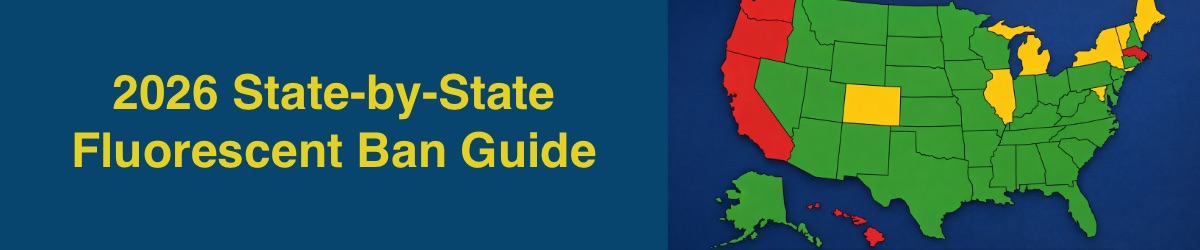
Many U.S. states have banned the sale of fluorescent lamps, including T8, T12, and compact fluorescent lamps (CFLs), as part of mercury reduction and energy-efficiency laws.
Most bans do not require immediate removal of existing fixtures, but they prohibit retailers from selling replacement lamps after the effective date.
Because of this, facility managers are replacing fluorescent lighting with high-efficiency LED retrofits or full fixture replacements to ensure long-term compliance.
Key Takeaways
-
- Active 2026 Bans: As of January 1, 2026, states such as Hawaii, Maine, Maryland, and Minnesota have officially ended the sale of most linear fluorescent tubes and pin-base CFLs.
- The Scarcity Factor: Even in states without active bans, manufacturers are shifting production entirely to LED, making replacement fluorescent lamps increasingly difficult and expensive to source.
- Different types of light shields are available for various applications, ensuring customized solutions for residential, commercial, and public spaces.
2026 Fluorescent Lamp Bans by State
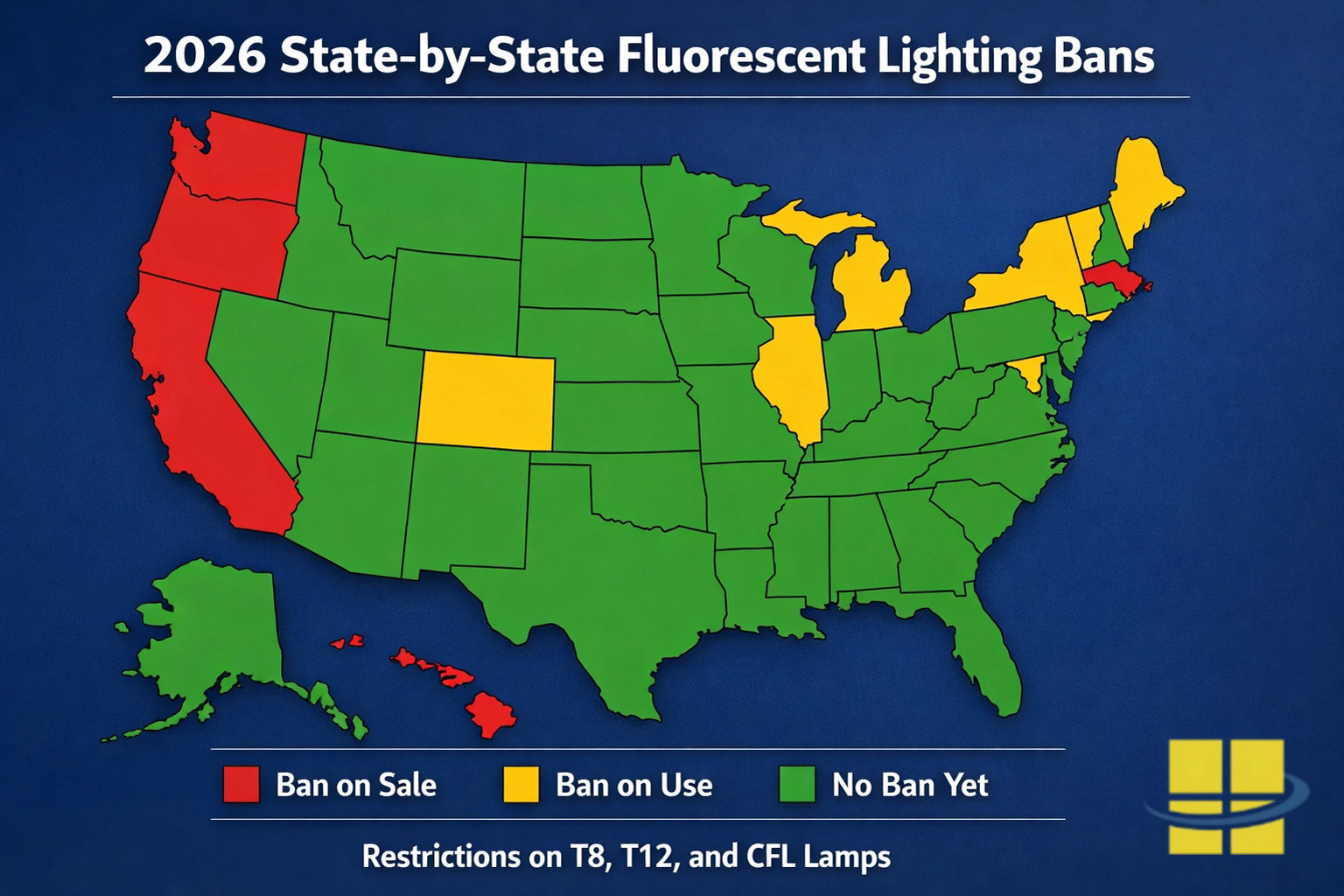
Several states have already implemented legislation restricting fluorescent lighting sales.
States with active bans (As of April 2026):
- California - (Ban includes screw-base and bayonet-base compact fluorescent light bulbs (CFLs) as of January 1, 2024, and will extend to pin-base CFLs and linear fluorescent lamps by January 1, 2025.)
- Colorado
- Hawaii
- Maine
- Maryland
- Minnesota
- Oregon
- Rhode Island
Upcoming/Phased Bans:
- Illinois: Screw-base/Bayonet CFLs are currently banned; Pin-base and Linear tubes follow on January 1, 2027.
- Washington: High-CRI bans are active; full linear tube bans take effect January 1, 2029.
Colorado: Starting January 1, 2025, the state will ban the manufacture, distribution, and sale of all general-purpose compact fluorescent lamps (CFLs) and linear fluorescent lamps under HB23-1161.
Hawaii: Since January 1, 2021, Hawaii has prohibited the sale of high-CRI linear fluorescent lamps (CRI >87). Under Act 225, the state will ban screw-base CFLs starting January 1, 2025, followed by a ban on pin-base CFLs and linear fluorescent lamps on January 1, 2026.
Maryland: The state will ban linear fluorescent lamps with CRI ≥87 starting October 1, 2024. For standard lighting, the prohibition on the sale of screw-base and bayonet-base CFLs begins July 1, 2025, with pin-base and linear lamps banned a year later on July 1, 2026.
New York: As of June 26, 2023, New York has implemented restrictions on the sale and manufacture of specialized linear fluorescent lamps, including high-CRI, cold-temperature, and impact-resistant models.
Most of these regulations target:
- Linear fluorescent lamps (T8 and T12)
- Compact fluorescent lamps (CFLs)
- Certain plug-in fluorescent lamps
For facility managers overseeing warehouses, campuses, hospitals, or retail locations, these bans mean replacement lamps may become unavailable even before laws take effect due to shrinking supply chains.

The Important Distinction: Illegal to Sell vs Illegal to Use
One of the most common misunderstandings about fluorescent bans is whether facilities must immediately remove installed lighting.
In most cases:
Illegal to Sell
- Retailers cannot sell new fluorescent lamps after the ban date.
Still Legal to Use
- Existing installed fixtures may remain in operation.
However, once a lamp burns out, replacements may not be available, forcing an immediate lighting retrofit.
This is why many organizations are conducting proactive lighting audits rather than waiting for failures.
The 120 Lumens-Per-Watt Efficiency Standard
Federal energy regulations are also accelerating the shift away from fluorescent lighting. In addition to general efficiency standards, some states have introduced high CRI restrictions, specifically targeting high color rendering index (CRI ≥87) fluorescent lamps, further limiting their availability.
A key benchmark is the 120 lumens-per-watt (LPW) efficacy threshold, which reflects modern LED performance standards. The Color Rendering Index (CRI) is also a regulatory focus, with high-CRI fluorescent lamps facing additional restrictions in certain states to promote energy efficiency and environmental safety. High CRI fluorescent lamps are being phased out due to these high CRI restrictions, as seen in recent state-level bans on high-CRI linear fluorescent and compact fluorescent lamps.
Typical performance comparison:
| Lighting Technology | Typical Efficiency |
|---|---|
| T12 Fluorescent | 60–70 LPW |
| T8 Fluorescent | 80–90 LPW |
| Modern LED Fixtures | 130–160 LPW |
LED upgrades are more energy efficient, save energy, and use less energy than fluorescent lamps, resulting in lower energy costs and reduced carbon emissions. Upgrading to energy-efficient LED tubes can cut energy consumption by up to 75%, resulting in substantial energy savings and a fast payback period.
Canada will implement a nationwide ban on the manufacture and sale of most mercury-containing fluorescent lamps starting January 1, 2026. Under the RoHS Directive, the manufacturing and importing of common linear fluorescent tubes and CFLs were effectively banned in 2023 in the EU.
2026 Federal Regulatory Update:
On March 31, 2026, the U.S. Department of Energy (DOE) issued a proposed determination regarding fluorescent ballasts. While they maintained current standards for now, the DOE explicitly noted that the market for fluorescent technology is in a permanent decline. This signal from the federal level confirms that LED is the only viable long-term infrastructure choice.
Because LEDs significantly exceed federal efficiency requirements, they are the primary replacement technology for most facilities.
Fluorescent Lighting Retrofit Options
Facilities replacing fluorescent lamps typically choose one of three retrofit strategies. As the lighting industry shifts toward LED products and away from mercury-containing lighting due to environmental impact and regulatory changes, upgrading your lighting system is increasingly important.
- Direct lamp replacement: Swap out old fluorescent tubes for LED replacement tubes. Options include ballast-compatible (plug-and-play) and direct wire LED tubes, the latter bypassing the ballast for improved reliability and efficiency.
- Fixture retrofit kits: Install retrofit kits that convert existing fixtures to support LED lamps and LED technology, providing a cost-effective LED upgrade while maintaining the fixture housing.
- Full fixture replacement: Replace the entire fixture with a new LED lighting system for maximum energy efficiency, compliance, and lighting quality.
An LED upgrade using modern LED lamps and LED technology is recommended for compliance, energy savings, and improved lighting performance. LED replacements and LED replacement tubes also offer environmental benefits by reducing mercury exposure and supporting sustainability.
LED Tube Retrofit (Ballast Bypass)
LED tubes that bypass the ballast, also known as direct wire LED replacement tubes, are widely used in commercial retrofits.
Benefits include:
- higher efficiency
- reduced maintenance
- elimination of ballast failures
- Improved durability and efficiency with direct wire installation compared to ballast-dependent options
Facilities commonly use ballast-bypass (direct-wire) LED replacement tubes in troffers, strip lights, and high-bay fixtures.
Example resource:
T8 LED Retrofit Tubes for Fluorescent Replacement
Hybrid LED Tubes
Hybrid tubes operate with or without a ballast, allowing gradual upgrades across large facilities.
Advantages:
- faster installation
- compatibility with many fixtures
- easier phased conversion
Example resource:
Hybrid LED Tubes for Fluorescent Fixtures
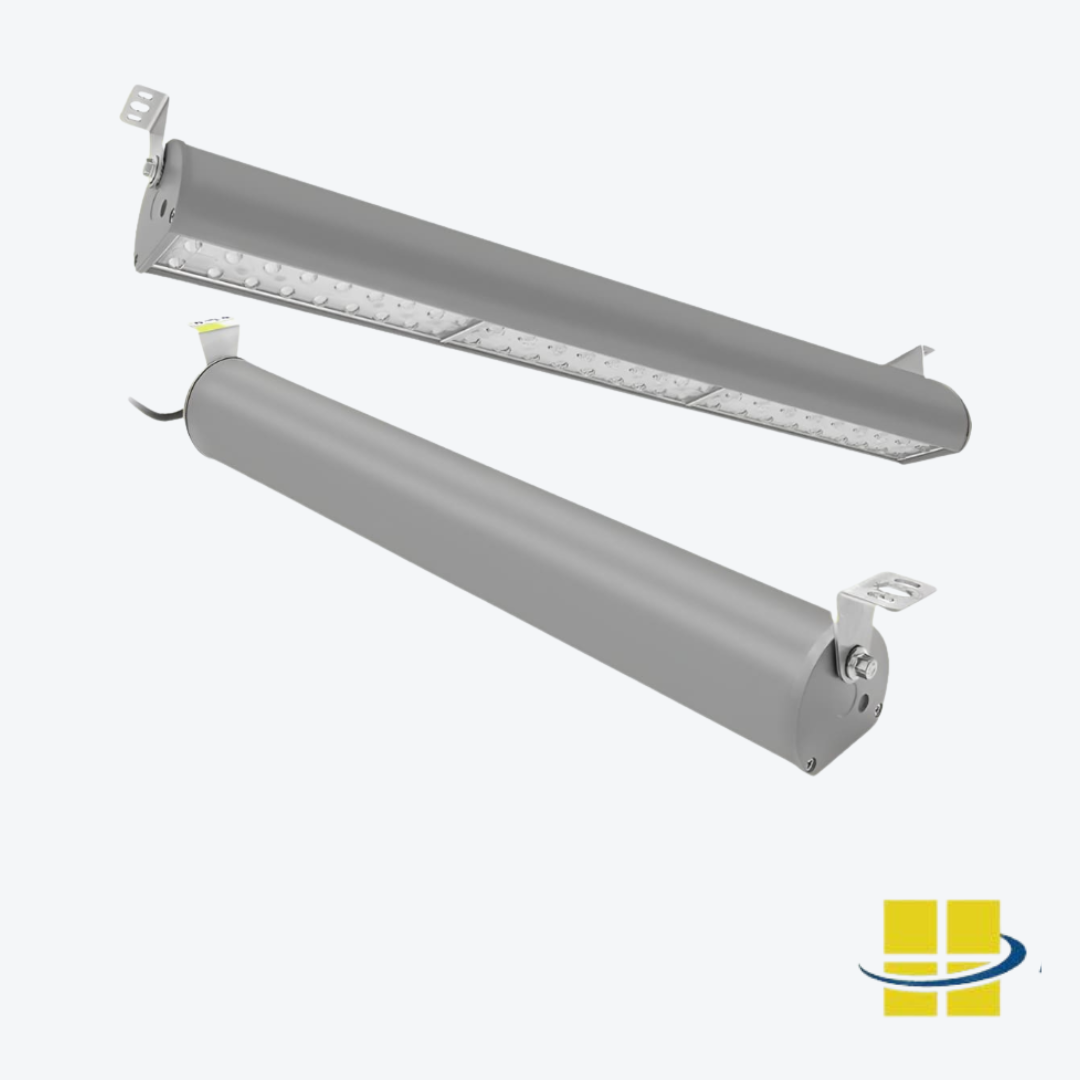
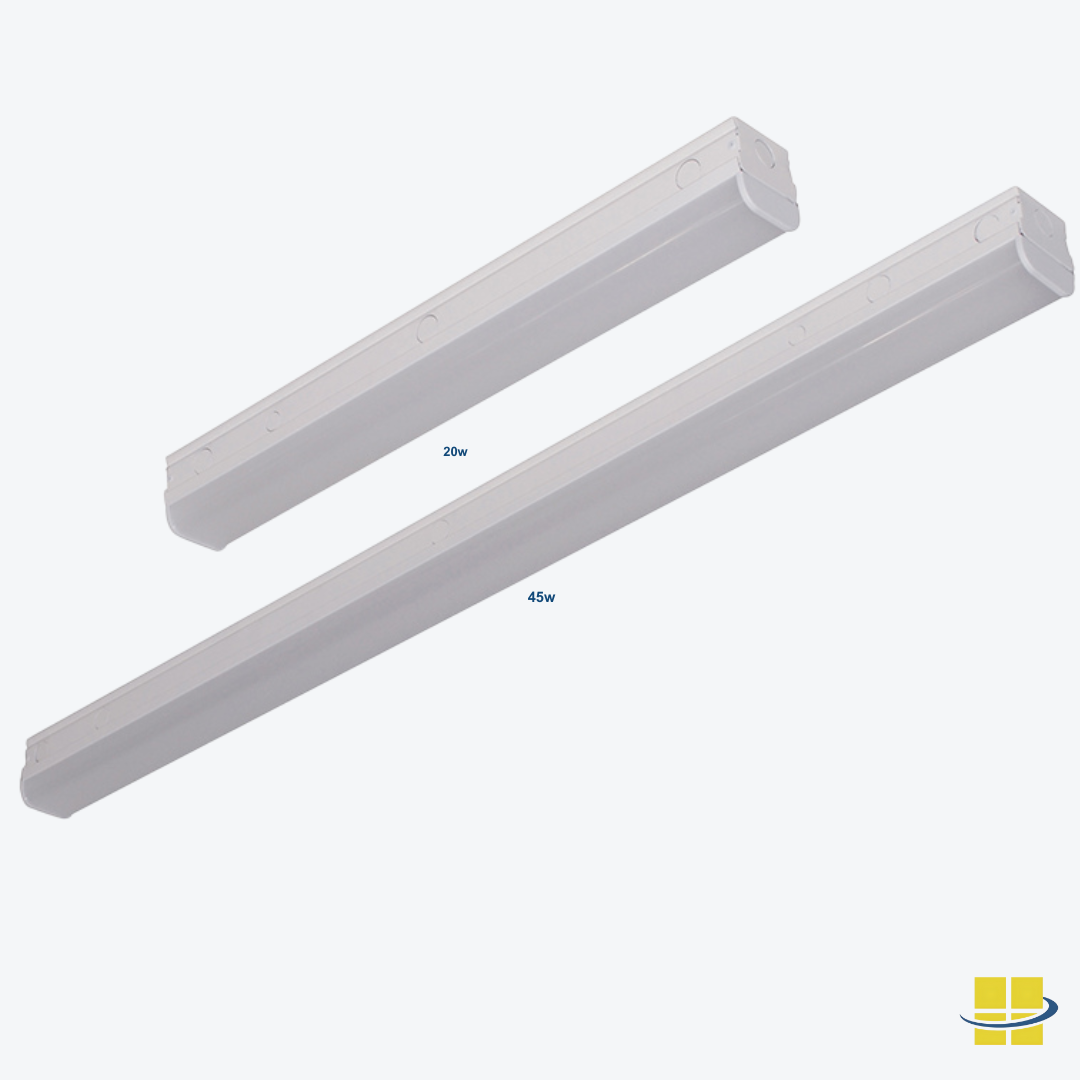
Full LED Fixture Replacement
When fixtures are old or inefficient, replacing the entire fixture provides the best long-term performance. Upgrading to LED lamps and LED technology ensures a modern, energy-efficient lighting system that meets current standards and delivers superior lighting quality.
Benefits include:
- improved optical design
- compatibility with occupancy sensors and smart controls
- maximum energy savings
Example resource:
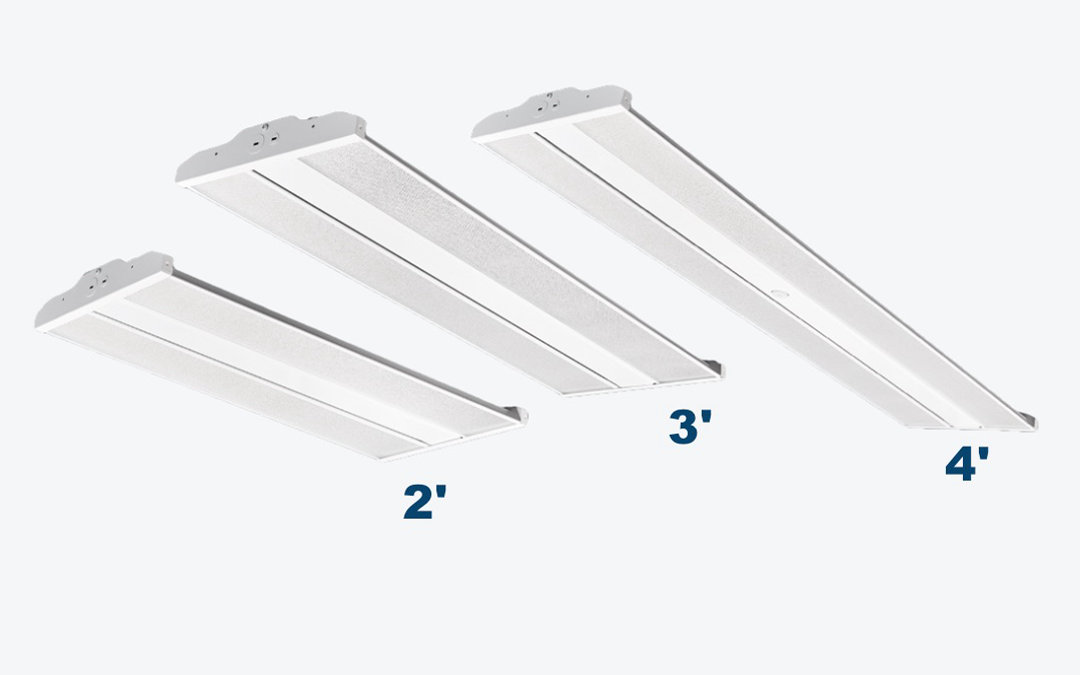
Outdoor Lighting Retrofits Without Trenching
Some facilities still operate wired bollard lights or outdated outdoor lighting systems that require costly electrical work to replace.
Solar retrofit systems allow facilities to convert existing bollards into lighting fixtures without underground wiring.
Advantages include:
- No trenching required
- Faster installation
- Reduced electrical labor
Example resource:
SECU Solar Bollard Retrofit System
Shop SECU (3K, 4K, or 5K) - Solar Security Bollard Light
Shop SECU 590nm Amber - Solar Security Bollard Light
Lighting Retrofit Checklist for Facility Managers
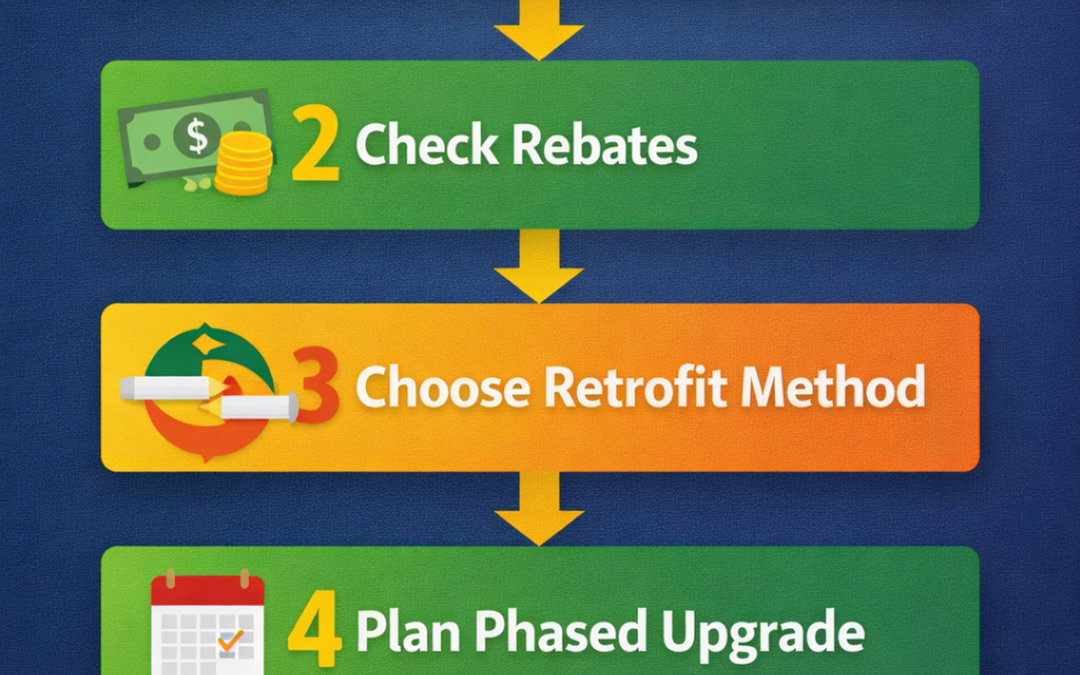
Facilities planning for fluorescent phase-out can follow this four-step approach. Commercial buildings that follow this checklist and upgrade to energy-efficient lighting can achieve significant cost savings and reduced energy costs.
Step 1: Audit Existing Lighting
Identify:
- fixture types
- lamp models (T8, T12, CFL)
- ballast types
- quantity per building zone
Step 2: Check Utility Rebates (Urgent)
Many utilities are phasing out early adopter rebates for LED retrofits because LEDs are now the baseline. Check with your provider immediately; 2026 may be the final year to receive significant financial incentives for transitioning away from T8/T12 systems.
Rebates often apply to:
- LED tubes
- fixture replacements
- lighting controls
Step 3: Choose a Retrofit Method
Facilities typically select:
- ballast bypass LED tubes
- hybrid tubes
- full fixture replacement
Outdoor fixtures may benefit from solar retrofits to avoid wiring upgrades.
Step 4: Plan a Phased Upgrade
Rather than waiting for lamps to fail, facilities often upgrade:
- building by building
- zone by zone
- during scheduled maintenance cycles
This avoids emergency lighting failures and supply shortages.
Why Facilities Are Replacing Fluorescent Lighting Now?
The fluorescent phase-out is accelerating due to three major factors:
- State regulations: Strict laws now restrict sales in several key states, effective January 2026.
- Federal efficiency standards: New DOE benchmarks make LED the only viable compliant technology.
- Supply Chain Pivot: Major global manufacturers have significantly reduced production of mercury-containing lamps. Even in states where sales are legal, lead times for fluorescent lamps have doubled, and prices have risen by over 30% compared to last year.
<div style="position: relative; overflow: hidden; aspect-ratio: 1920/1080"><iframe src="https://share.synthesia.io/embeds/videos/a8e8cb4f-d486-422f-bc72-faa7e5d6b887" loading="lazy" title="Synthesia video player - SECU 3w Solar-Powered Security Bollard Light" allowfullscreen allow="encrypted-media; fullscreen; microphone; screen-wake-lock;" style="position: absolute; width: 100%; height: 100%; top: 0; left: 0; border: none; padding: 0; margin: 0; overflow:hidden;"></iframe></div>
A key reason for the phase-out is the environmental impact and mercury exposure risks associated with fluorescent tubes. Approximately 75% of fluorescent tubes are not disposed of properly by end-users, leading to mercury contamination of rivers, lakes, and oceans.
Facilities that upgrade early benefit from:
- lower energy consumption
- longer fixture life
- improved lighting quality
- predictable maintenance planning
Conclusion
In conclusion, the fluorescent ban 2026 affects facility managers across the U.S., making it essential to understand each state’s fluorescent phase-out laws and plan an effective T8 LED replacement compliance strategy. By conducting a thorough facility lighting retrofit checklist, taking advantage of utility rebates, and choosing the right LED tube or full fixture replacement, facilities can stay fully compliant while improving energy efficiency and reducing maintenance costs. Whether you’re retrofitting indoor troffers or converting outdoor bollards with solutions like the SECU solar retrofit, acting now ensures your operations remain future-proof and compliant with fluorescent phase-out regulations. Don’t wait until existing lamps fail; proactive upgrades are the key to smooth compliance with state fluorescent bans.
Frequently Asked Questions About The Fluorescent Light Ban 2026 (People Also Ask)
Are fluorescent lights illegal in the United States?
They are not "illegal to own," but they are increasingly illegal to sell. As of April 2026, nine states have total bans on the sale of common linear tubes. While the federal government has not issued a blanket nationwide ban, its efficiency standards and the industry's shift toward LED have made fluorescents a "legacy" technology that is being phased out by market forces and state laws alike.
When will T8 fluorescent bulbs be banned?
Many states began banning T8 fluorescent lamp sales between 2024 and 2026. Exact dates vary by state, but the transition to LED lighting is already underway.
Can I replace fluorescent tubes with LED tubes?
Yes. LED tubes are designed to replace fluorescent lamps in existing fixtures. Options include ballast-compatible tubes, hybrid tubes, and ballast bypass tubes, depending on installation requirements.
Do fluorescent bans apply to existing buildings?
No. Most laws prohibit selling new fluorescent lamps, not using existing ones. However, once lamps fail, replacements may be difficult or impossible to purchase.
What is the best replacement for fluorescent lighting?
In most facilities, the best replacement is LED lighting, which offers:
- higher efficiency
- longer lifespan
- lower maintenance costs
- compliance with new energy regulations